I recently visited San Francisco to promote Exit Wounds at the aptly named Fabulosa Books in the Castro. My favorite part of any book event is the Q&A. That night, the audience and I had a lively discussion about the issues raised by the novel, and it quickly became clear that I had touched a nerve.
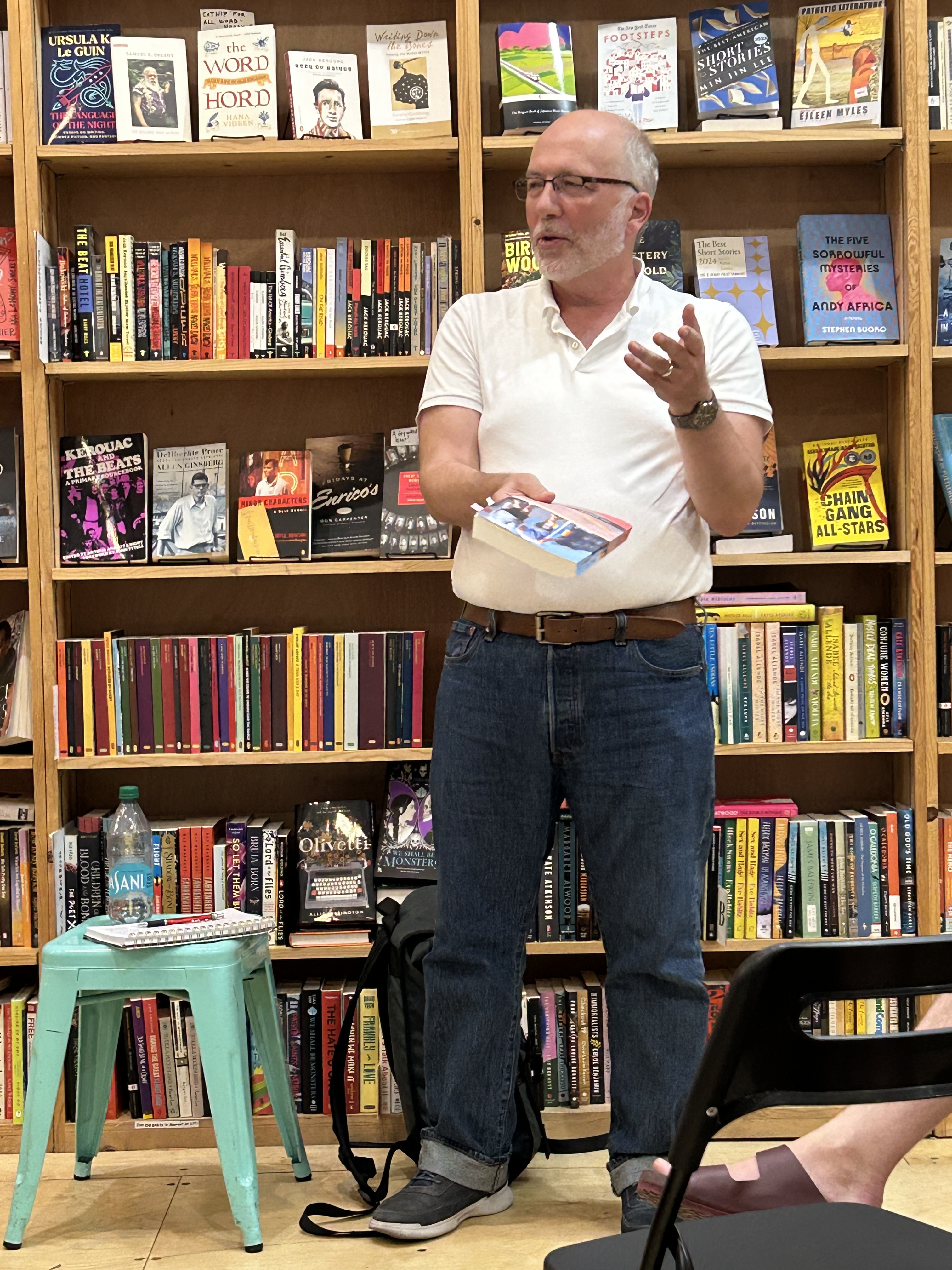
Most of the audience had lived in San Francisco for several years and well understood the concerns expressed by the book’s characters—the higher cost of living, generational disconnects, the loss of cultural touchstones. But beyond those practical concerns, we also seemed to share a nostalgia for what our lives had been like when we first arrived in the city.
Studies suggest that the music you listened to in your teens remains your favorite throughout your life. There’s something about the formative years that makes those early feelings and tastes indelible. You could say that Joni Mitchell and James Taylor, as much as my genetics or my schooling, made me who I am.
I think something similar happened when I moved to San Francisco at the age 31—well beyond the formative years, but crucial nonetheless. I chose a place that reflected who I wanted to be, as much as Sweet Baby James had 15 years before.
Ironically, part of that vision was the dynamic nature of the city, a place that questioned convention and always welcomed the new. When I was new, it welcomed me, too. Like the cat I adopted at a shelter (and to whom Exit Wounds is dedicated), San Francisco chose me as much as I chose it.
But somewhere along the way, we outgrew one another—San Francisco by continuing to embrace, and even drive, change; me, by realizing enough of my goals to be ready to step off the roller coaster.
After the visit, I discovered that the phenomenon was wider-ranging than I’d assumed. As I spoke to Minnesotans—gay and straight, male and female—I learned that the book resonated just as strongly here. The way the novel’s characters feel about San Francisco reflects the way long-term residents often feel about Minneapolis—and maybe any dynamic city. Perhaps, I thought, it’s less about how the place develops than how the individual does, or how quickly we reach a sense of contentment that makes further change less appealing. That may even be a goal for many of us: to find the sweet spot and stay there.
So many stories, whether on the page or in real life, are about the attempt to “find” oneself. But what happens when you’ve finally found it? I’m still asking that question.
 Lewis DeSimone