Mid-Century Memento

My parents were into mid-century modern furniture without ever having heard the term. I suppose that’s because they bought it at mid-century, when it was just called furniture. When I was growing up, I thought it was nice but boring. But then I came out of the closet.

The style seems to be hotter—and gayer—now than when it started. It’s so hot and gay that it even has a sitcom named after it. Mid-Century Modern premiered on Hulu last weekend, coincidentally when I was at the Saints & Sinners Literary Festival to present at a panel on middle-aged homosexuals. (The actual title of the panel was “Generational Change in Gay Culture and Literature,” but that’s a mouthful.)

The show, brought to us by the same production team that created the groundbreaking Will & Grace, which, for me, defined “must-see TV” for a decade, stars Nathan Lane, Matt Bomer, and Nathan Lee Graham in a familiar formula—a group of friends living together in a created family that’s almost as dysfunctional as the home-grown variety.
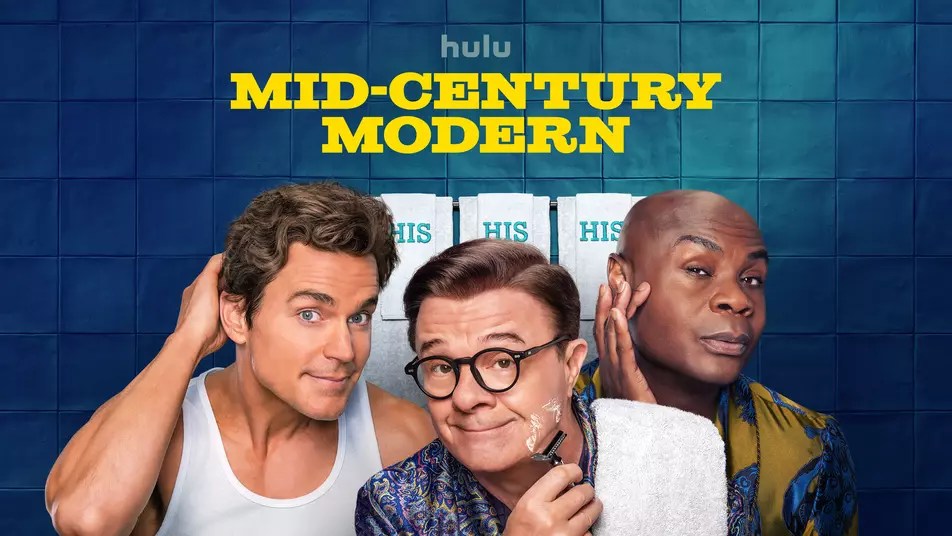
Unlike its predecessor, a very urbane New York show, Mid-Century Modern takes place in Palm Springs. While Will & Grace’s characters were in their energetic and gorgeous thirties, this show focuses on an older set (which, interestingly enough, Will Truman would fit quite well in, at this point). It’s basically a cross between Will & Grace and The Golden Girls.

The very idea that Matt Bomer can be considered middle-aged boggles my mind. He’s actually more than 20 years younger than Nathan Lane, the oldest of the trio, but the chemistry among the three is strong enough for me to suspend my disbelief. If you squint, you can just buy into the conceit that they’ve been friends for thirty years (let’s forget that Bomer would have been underage).

Aside from the gay subject matter, Mid-Century Modern feels like an old-fashioned show, entertaining rather than didactic, its plots easily resolved in 30 minutes. It’s the kind of TV I crave these days, a relief from the chaos of the real world. It’s a delicious fantasy, where the perils of aging are deliberately glossed over. Even when the boys go out cruising, on a trip to Fire Island, there’s no sense of generational conflict. Arthur (Graham’s character) gets a little daddy attention, but the difference in age between him and his would-be suitor is barely acknowledged.

The setting, of course, has a lot to do with it. My own peer group (before we hit 40 ourselves) used to deride Palm Springs as the place where old homosexuals went to die. But even then we knew the city was both literally and metaphorically an oasis—where there’s water in the desert and civility in a hateful world.

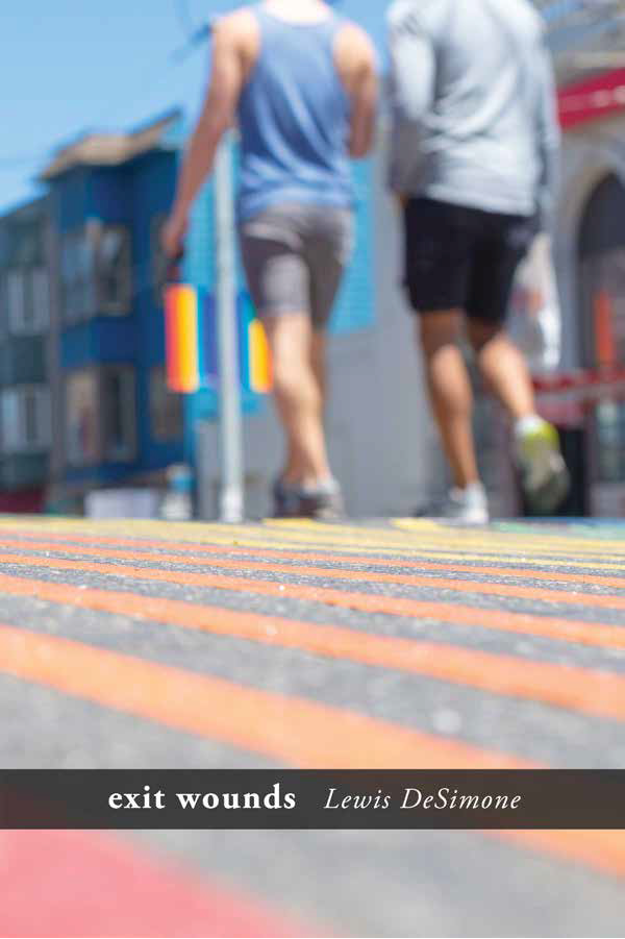
That’s what San Francisco was for me, from the time I arrived in my early thirties to my reluctant departure 25 years later—a refuge from the harsher world outside. My novel Exit Wounds explores how the city, and the gay community that has enlivened it for so long, have changed over the years, as the distinctive qualities of both have begun to blend with the dominant world they once rejected.

Living the quiet life in Minneapolis, I’m in a holding pattern now, but I’ve often thought I might end up in Palm Springs, that hotter (at least on the thermometer) bubble. And now, after watching Matt and the Nathans, I find myself rethinking my aversion to desert weather. Being in a gay haven again, with people my own age, might just make up for it. Like my mother’s furniture, we were born in the mid-century era, and are now in the middle of our own century. We’re not done yet.

When my mother died a few years ago, we spent several days going through her things. There were lovely mementos, from jewelry to dishware to family photos. But there were also an inexplicable number of meat thermometers, for someone who rarely cooked more than scrambled eggs. More Hummel figurines than we knew what to do with. And so many never-used dish towels I wondered if she’d been expecting a flood.

We made the usual piles: keep, donate, throw. Most of her tchotchkes we laid out on a communal table in the building’s mail room. Every couple of hours, we’d come back with more stuff and find that her neighbors had already cleaned out the last batch.

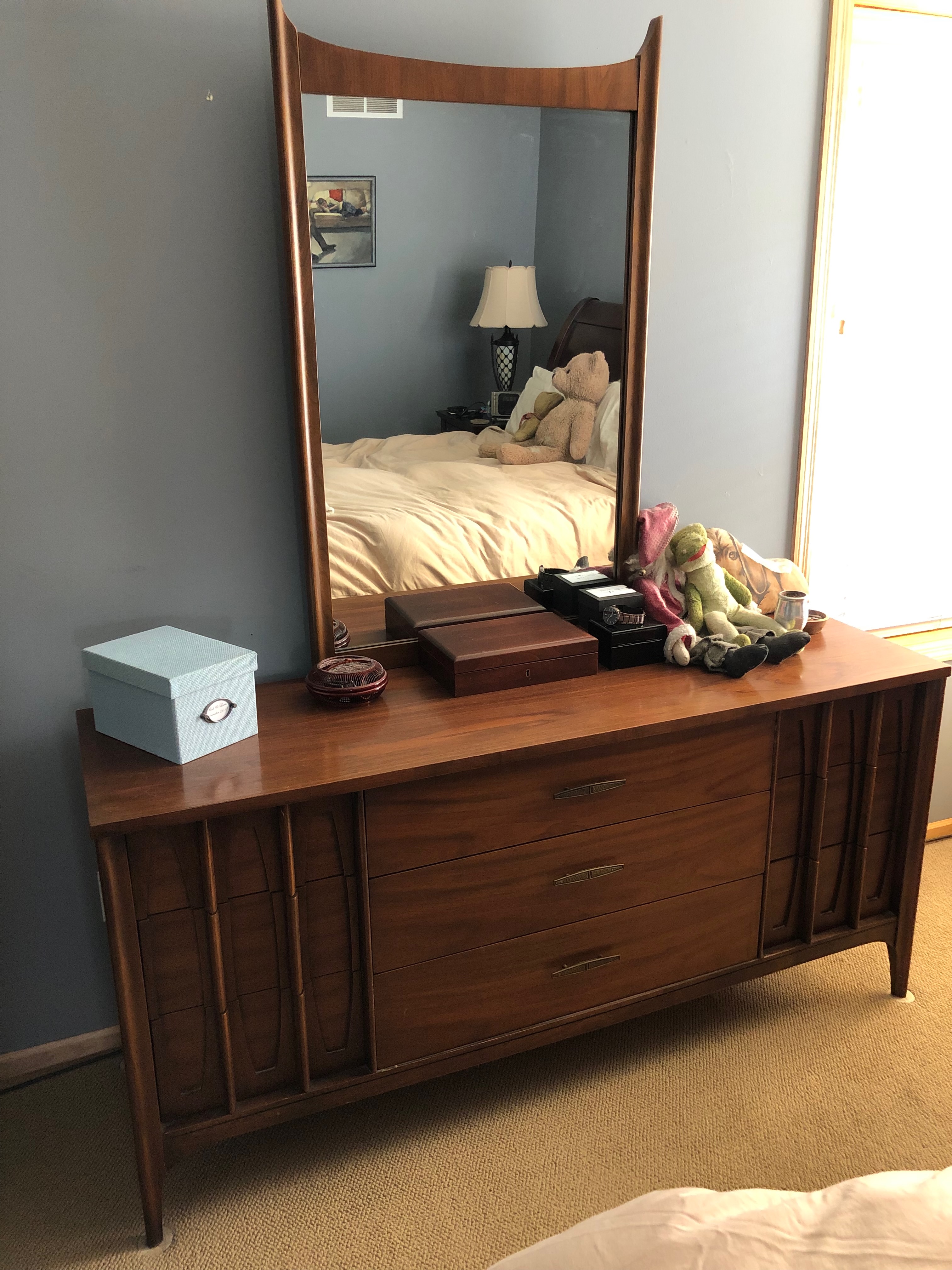
I didn’t even think about the furniture, assuming the expense of shipping it 1,000 miles wouldn’t be worth it. And then my husband took one look at the mid-century modern bedroom set and insisted we take it. I’m so glad he did. That stuff is sturdy, still beautiful after 60 years and ready for more.
Bay Area Reporter Review of “Exit Wounds”

There’s nothing quite like hometown validation. Exit Wounds just received a rave review in San Francisco’s Bay Area Reporter. I’m thrilled by the kind words of the reviewer, Jim Piechota:

‘Exit Wounds’ by Lewis DeSimone, $21.95 (Rebel Satori Press)
Mining the sensitive topics of aging, culture decline, and the tentativeness and precariousness of modern gay life, novelist and former San Franciscan Lewis DeSimone’s latest book chronicles Craig Amundsen, a gay San Francisco man who wrestles with living life in the big city with a cruel demographic that seemed to be skewing younger and younger.

DeSimone taps into the reality of life in the Bay Area with its regal real estate market, tech obsession, ever-widening generational disparities, and a self-absorbed atmosphere that makes his protagonist feel even more isolated amidst a recent break up and a job with a shaky shelf life.

As one particularly jaded character laments on gay life in the Castro: “It’s the culture that’s dying…men our age belong in the suburbs.”

With just the right combination of realistic dialogue, barbed criticisms, dark humor, and engrossing plot and narration, DeSimone has, as he has with his former books, hit the sweet spot in this immersive tale of aging gay men, the pains and pleasures of jury duty, and the myriad ways in which queers coexist, attempt to stay sane, retain happiness, and, against a barrage of barriers, thrive. This is a seamless, impressively written love letter to San Francisco and the vibrant, colorful tapestry of communities which make it tick.

Can You Go Home Again? 

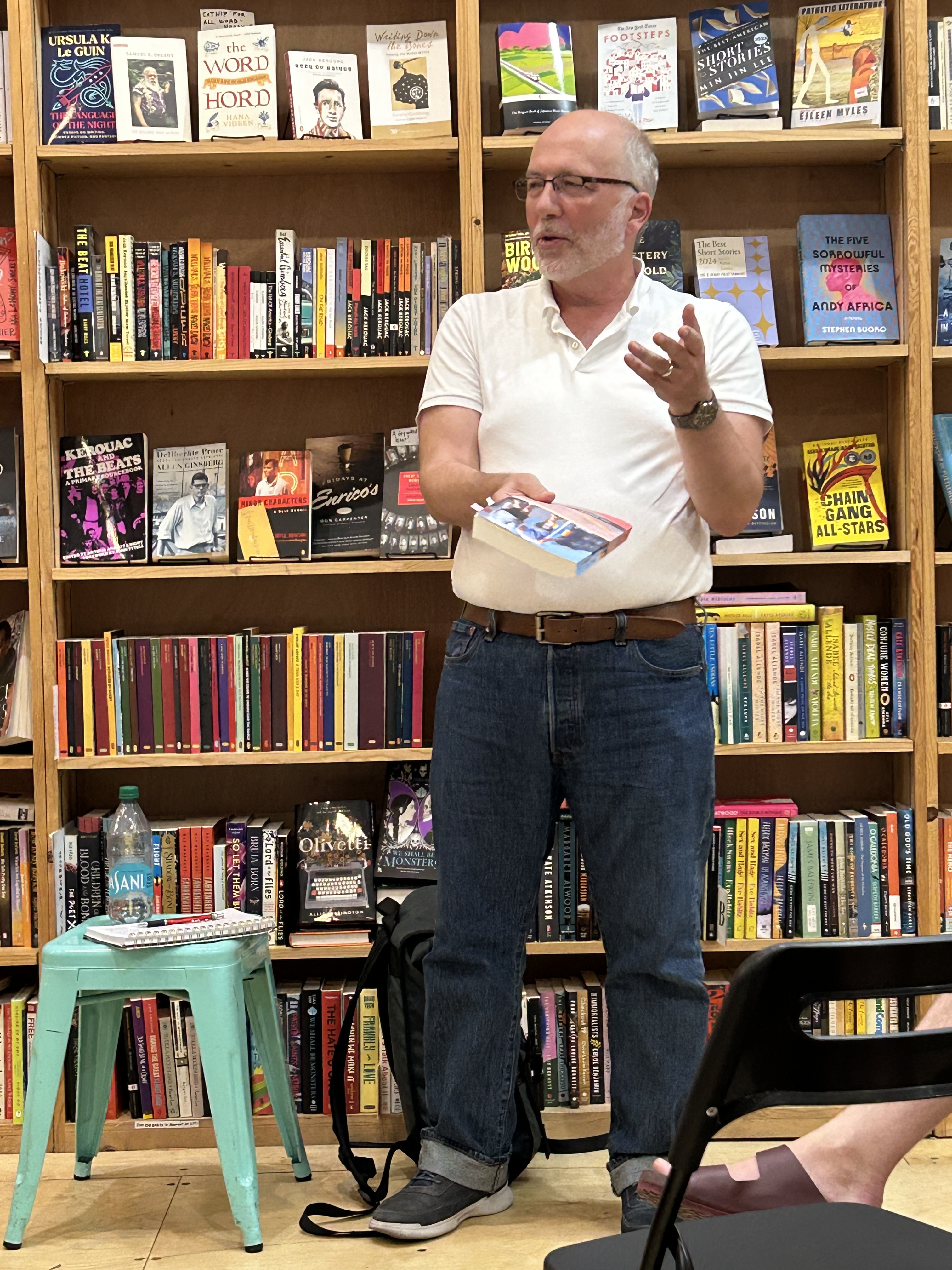
I recently visited San Francisco to promote Exit Wounds at the aptly named Fabulosa Books in the Castro. My favorite part of any book event is the Q&A. That night, the audience and I had a lively discussion about the issues raised by the novel, and it quickly became clear that I had touched a nerve.

Most of the audience had lived in San Francisco for several years and well understood the concerns expressed by the book’s characters—the higher cost of living, generational disconnects, the loss of cultural touchstones. But beyond those practical concerns, we also seemed to share a nostalgia for what our lives had been like when we first arrived in the city.

Studies suggest that the music you listened to in your teens remains your favorite throughout your life. There’s something about the formative years that makes those early feelings and tastes indelible. You could say that Joni Mitchell and James Taylor, as much as my genetics or my schooling, made me who I am.

I think something similar happened when I moved to San Francisco at the age 31—well beyond the formative years, but crucial nonetheless. I chose a place that reflected who I wanted to be, as much as Sweet Baby James had 15 years before.

Ironically, part of that vision was the dynamic nature of the city, a place that questioned convention and always welcomed the new. When I was new, it welcomed me, too. Like the cat I adopted at a shelter (and to whom Exit Wounds is dedicated), San Francisco chose me as much as I chose it.

But somewhere along the way, we outgrew one another—San Francisco by continuing to embrace, and even drive, change; me, by realizing enough of my goals to be ready to step off the roller coaster.

After the visit, I discovered that the phenomenon was wider-ranging than I’d assumed. As I spoke to Minnesotans—gay and straight, male and female—I learned that the book resonated just as strongly here. The way the novel’s characters feel about San Francisco reflects the way long-term residents often feel about Minneapolis—and maybe any dynamic city. Perhaps, I thought, it’s less about how the place develops than how the individual does, or how quickly we reach a sense of contentment that makes further change less appealing. That may even be a goal for many of us: to find the sweet spot and stay there.

So many stories, whether on the page or in real life, are about the attempt to “find” oneself. But what happens when you’ve finally found it? I’m still asking that question.

Exit Wounds: New Novel to Be Released 7/23/24

It’s official! My latest novel, Exit Wounds, will be published by Rebel Satori Press on July 23!

Exit Wounds focuses on a group of 50ish gay men in San Francisco—between the original AIDS generation and millennials—who are now dealing with middle age and the decline of the cultural touchstones that once defined gay life. Having lived in San Francisco—and the Castro, in particular—for nearly 25 years, I saw its transformation firsthand. While the book addresses recent changes, for good or ill, it does so with a nostalgic look at what has been lost in the process.

Craig Amundsen’s world is in a state of flux—or, as he sees it, falling apart. Settling into his 50s, he feels less and less a part of his beloved San Francisco, as the gay mecca gives way to tech bros and overpriced real estate. In the wake of a failed relationship and on the cusp of losing a job he loves, Craig jumps at the chance for jury duty, if only as a diversion from his own problems. The trial challenges his assumptions about the world around him, ultimately revealing a way toward embracing the inevitability of change—and even the possibility of love.

Exit Wounds examines the challenges of aging in a youth-centered culture, with a playful sense of humor and a touch of romance. I hope you enjoy!

Pride and the Middle-Aged Homosexual

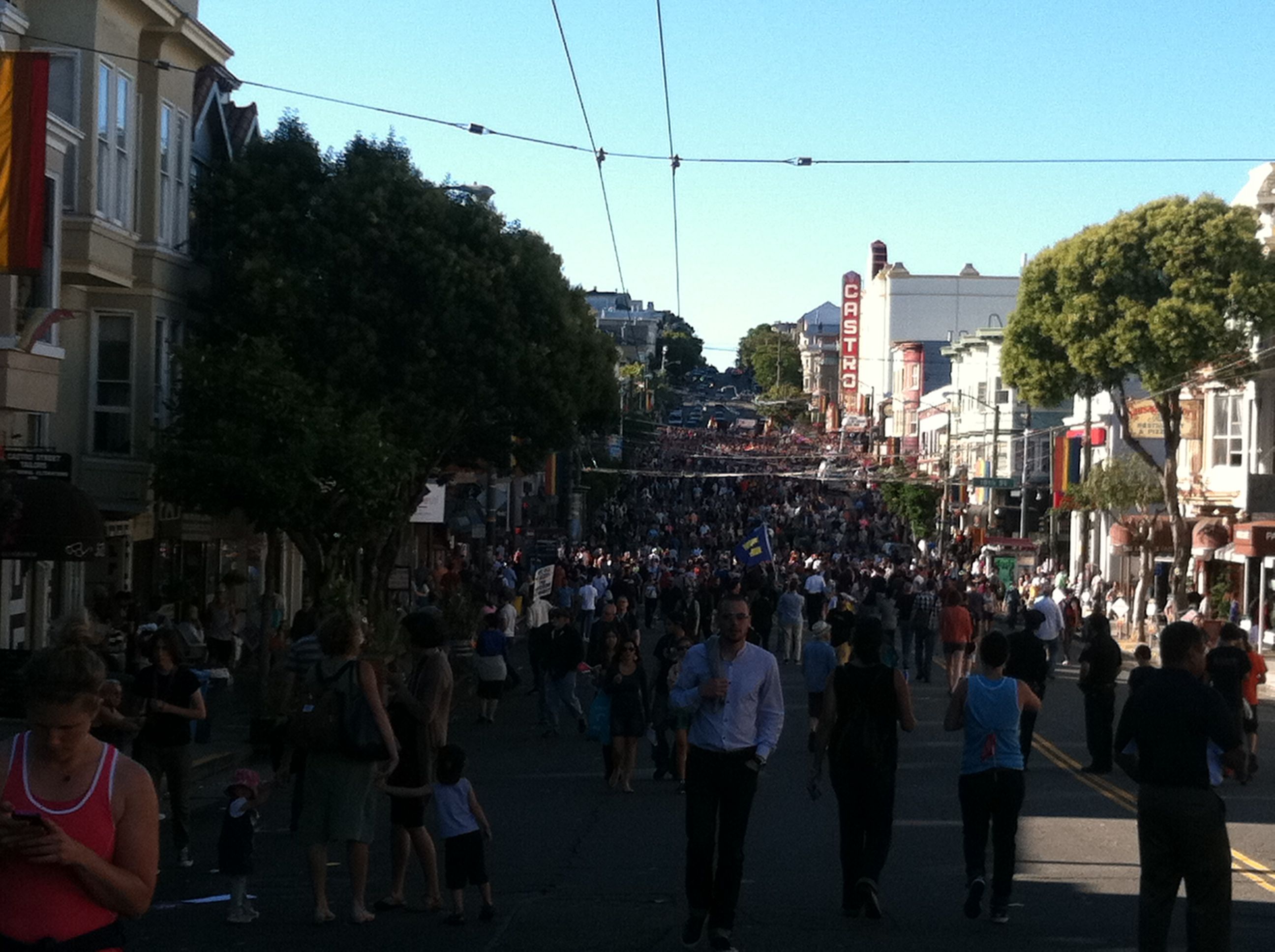
castro st.jpg

It’s Pride today in San Francisco, and for the first time in years I wish I were a part of it.

Friends are posting photos on Facebook—rainbows, drag queens, men in short-shorts—and I have a sudden longing to be there, in the middle of the throng in the city I called home just 15 months ago. But I also know that, if I were still living in San Francisco, I would probably stay away from the parade. And my curmudgeonly hackles would go up when the post-parade revelers spilled into the Castro, making too much noise and leaving too much mess behind.

As I learned last year, Pride in Minneapolis is a much quieter affair—a shorter parade, a festival in Loring Park that is reasonably easy to walk through—but I wasn’t moved to go there either this time around. Instead I stayed home in my quiet neighborhood, in my even quieter back garden, where the only in-your-face creatures are my cats. That’s one of the reasons I moved here, after all: to have a simpler, quieter life, without all the drama on offer in a metropolis like San Francisco.

Truth be told, of course, I miss the drama. Perhaps not as much as the gorgeous view from Corona Heights or the overflowing cocktails at the Twin Peaks Tavern, but enough to provoke a nostalgic pang.

When I look deeper at this feeling, though, it’s not so much that I want to be in San Francisco today. I think what I want is to be in San Francisco in 1999—or, for that matter, Boston in 1989. Not that those places were different then, but that I was. When I think about Pride, I think about my first one—sitting with friends on Boston Common after the parade. A stranger joined us, a man wearing a clerical collar and a string of pearls who referred to himself as a “Lesbyterian minister.”

I think of the tourist family who walked past our blanket on the grass and asked, in thick Asian accents, what was going on.

“It’s Gay Pride,” we told them.

The parents looked stunned. “Are you gay?” the man asked.

And one of my friends raised an arm and gestured at the thousands of people sitting and walking through the park. “They’re ALL gay!”

I’ll admit that I was as surprised that day as that innocent couple. For the first time in my life, I saw just how big my community was. That moment gave the lie to every time someone on television or in my personal life had ever shaken their head with feigned concern and told me I was doomed to spend my life alone. I was alone no longer. I was with my family, and my family was legion.

I went to the parade religiously every year after that, whether in Boston or New York or San Francisco—until 10 or so years ago, when it came to seem more trouble than it was worth. The crowd along Market Street was so thick, it was hard to find a good vantage point—unless you arrived early enough to grab a spot on the curb (which meant rising far earlier than my aging body wanted to on a Sunday morning). So my attendance became spotty, and most years, we would simply get together with friends for brunch or to walk around the Castro in our brightest colors, wearing T-shirts whose logos became less and less scandalous over time.

I never stopped loving Pride, but as I grew older, I came to feel more comfortable expressing that love from a distance. I had my community now—my friends, my husband, my home in the Castro. For 30+ years, I have lived a completely uncloseted life—25 of those years in the gayest place on earth, a predominantly gay neighborhood in a city where gayness is an asset and homophobia is a source of shame.

The celebration of Pride is essential, as important now as it ever was, because the struggle continues. On the surface, it looks like we’ve won. We can get married, we can serve in the military, in many places we are protected from discrimination. And one of the top contenders for president of the United States is one of us. But we are also under siege. And now that I no longer live in the gayest place on earth, I can see that more clearly. Minneapolis is a very liberal town, but it’s not quite the bubble I knew for a quarter-century. In Minnesota, I actually think before grabbing my husband’s hand on the street—an act that was second nature to me in the Bay Area.

So we need Pride because the world has not changed enough, because the race is still being run.

What makes my heart surge at the images of Pride parades, however—no matter where they are in the world—is the knowledge that every single one of them is someone’s first Pride. There are young people in Minneapolis, Milwaukee, St. Louis, and all around the world who need the same experience that I had all those years ago on Boston Common. They need to see their tribe come together and realize just how large it is. And they need to feel the joy of being with their people, the joy of being who they area and loving whom they love.

I don’t miss Pride per se, but I do miss the novelty of it. Coming out wasn’t easy, and the first few years after it had their challenges, as I learned to find my place in a new world. But when I think back to that period, it’s not the struggle that I remember so much: it’s the sense of liberation. Freedom, of course, isn’t free. But it is, undoubtedly, priceless.

Happy Pride to all, whether it’s your first or your fiftieth!