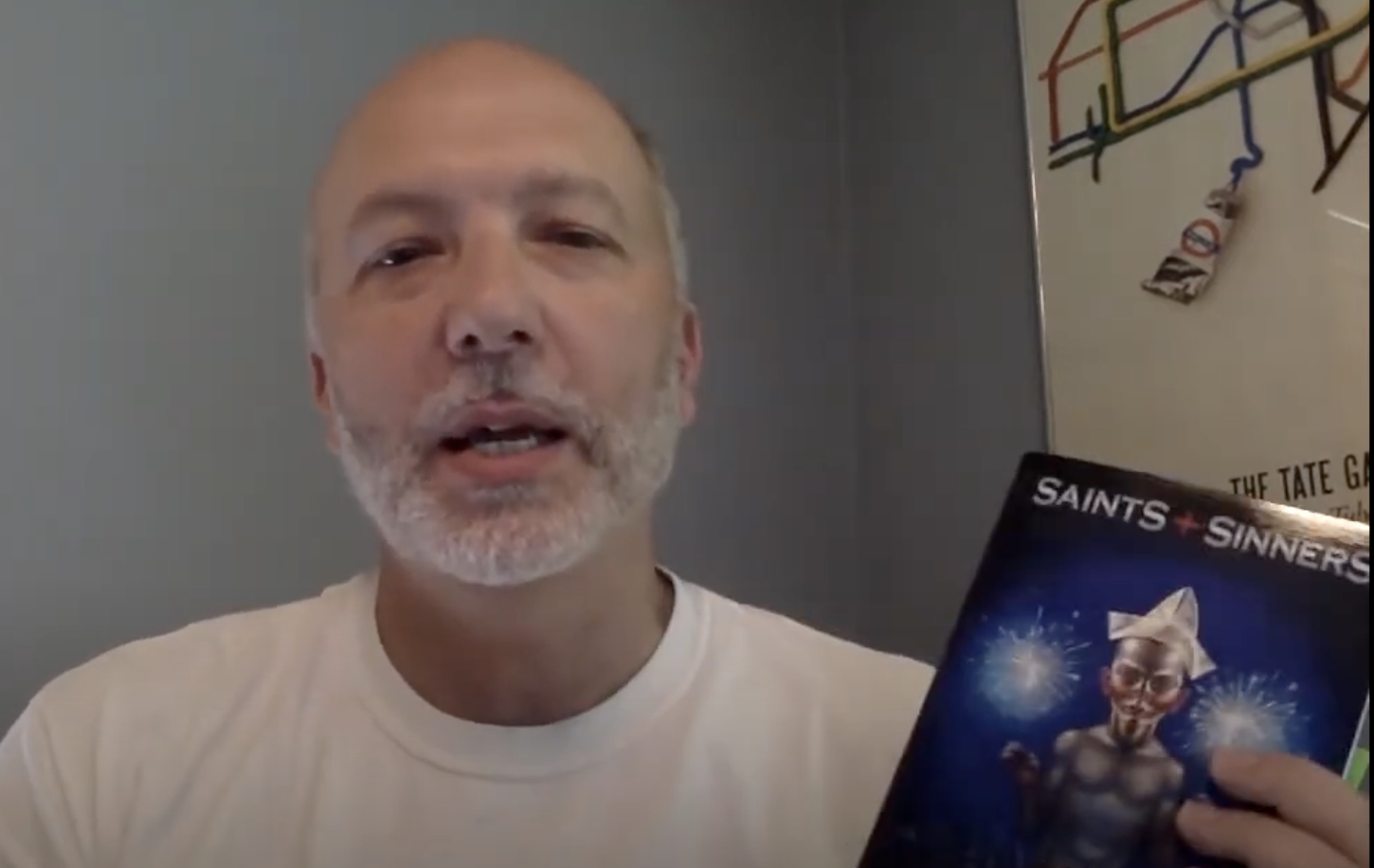
A bit of a blast from the past. The annual Saints & Sinners Literary Festival holds a contest for short fiction. At the 2021 festival, I was named a runner-up for my story “Mesopotamia.” Unfortunately, the festival didn’t happen that year because of the pandemic. So in place of the usual in-person reading, a number of writers contributed to a group video, which is available on youtube.
My story for the contest later became the opening chapter of Exit Wounds. I thought it would be fun to share the reading with you now that the book is out. So if you haven’t heard me read in person, here’s the next best thing.
My reading begins around the 5:00 minute mark on the linked video. And I’m sure you’ll be interested in hearing others, as well. Enjoy!
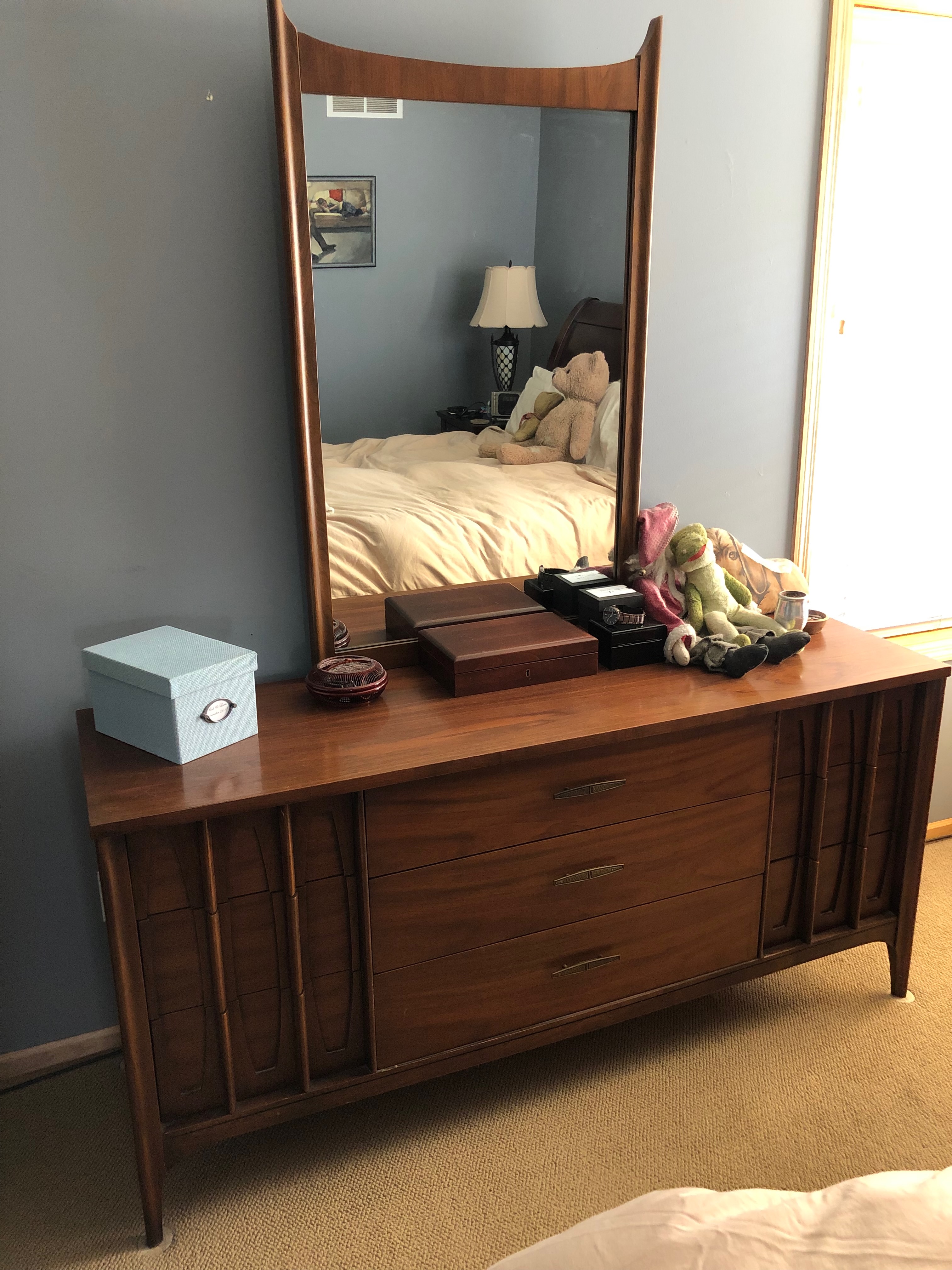
My parents were into mid-century modern furniture without ever having heard the term. I suppose that’s because they bought it at mid-century, when it was just called furniture. When I was growing up, I thought it was nice but boring. But then I came out of the closet.
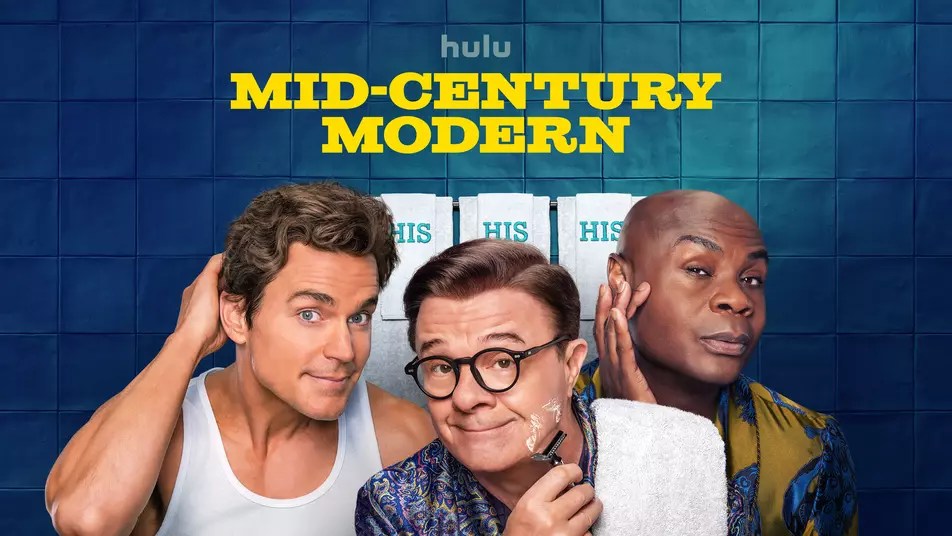
The style seems to be hotter—and gayer—now than when it started. It’s so hot and gay that it even has a sitcom named after it. Mid-Century Modern premiered on Hulu last weekend, coincidentally when I was at the Saints & Sinners Literary Festival to present at a panel on middle-aged homosexuals. (The actual title of the panel was “Generational Change in Gay Culture and Literature,” but that’s a mouthful.)
The show, brought to us by the same production team that created the groundbreaking Will & Grace, which, for me, defined “must-see TV” for a decade, stars Nathan Lane, Matt Bomer, and Nathan Lee Graham in a familiar formula—a group of friends living together in a created family that’s almost as dysfunctional as the home-grown variety.
Unlike its predecessor, a very urbane New York show, Mid-Century Modern takes place in Palm Springs. While Will & Grace’s characters were in their energetic and gorgeous thirties, this show focuses on an older set (which, interestingly enough, Will Truman would fit quite well in, at this point). It’s basically a cross between Will & Grace and The Golden Girls.
The very idea that Matt Bomer can be considered middle-aged boggles my mind. He’s actually more than 20 years younger than Nathan Lane, the oldest of the trio, but the chemistry among the three is strong enough for me to suspend my disbelief. If you squint, you can just buy into the conceit that they’ve been friends for thirty years (let’s forget that Bomer would have been underage).
Aside from the gay subject matter, Mid-Century Modern feels like an old-fashioned show, entertaining rather than didactic, its plots easily resolved in 30 minutes. It’s the kind of TV I crave these days, a relief from the chaos of the real world. It’s a delicious fantasy, where the perils of aging are deliberately glossed over. Even when the boys go out cruising, on a trip to Fire Island, there’s no sense of generational conflict. Arthur (Graham’s character) gets a little daddy attention, but the difference in age between him and his would-be suitor is barely acknowledged.
The setting, of course, has a lot to do with it. My own peer group (before we hit 40 ourselves) used to deride Palm Springs as the place where old homosexuals went to die. But even then we knew the city was both literally and metaphorically an oasis—where there’s water in the desert and civility in a hateful world.
That’s what San Francisco was for me, from the time I arrived in my early thirties to my reluctant departure 25 years later—a refuge from the harsher world outside. My novel Exit Wounds explores how the city, and the gay community that has enlivened it for so long, have changed over the years, as the distinctive qualities of both have begun to blend with the dominant world they once rejected.
Living the quiet life in Minneapolis, I’m in a holding pattern now, but I’ve often thought I might end up in Palm Springs, that hotter (at least on the thermometer) bubble. And now, after watching Matt and the Nathans, I find myself rethinking my aversion to desert weather. Being in a gay haven again, with people my own age, might just make up for it. Like my mother’s furniture, we were born in the mid-century era, and are now in the middle of our own century. We’re not done yet.
When my mother died a few years ago, we spent several days going through her things. There were lovely mementos, from jewelry to dishware to family photos. But there were also an inexplicable number of meat thermometers, for someone who rarely cooked more than scrambled eggs. More Hummel figurines than we knew what to do with. And so many never-used dish towels I wondered if she’d been expecting a flood.
We made the usual piles: keep, donate, throw. Most of her tchotchkes we laid out on a communal table in the building’s mail room. Every couple of hours, we’d come back with more stuff and find that her neighbors had already cleaned out the last batch.
I didn’t even think about the furniture, assuming the expense of shipping it 1,000 miles wouldn’t be worth it. And then my husband took one look at the mid-century modern bedroom set and insisted we take it. I’m so glad he did. That stuff is sturdy, still beautiful after 60 years and ready for more.
I just returned from the annual Saints and Sinners Literary Festival in New Orleans. It was my first time there since the pandemic, so it felt a bit like a homecoming. The weekend was full of thought-provoking panels, inspiring readings, and the joy of community.
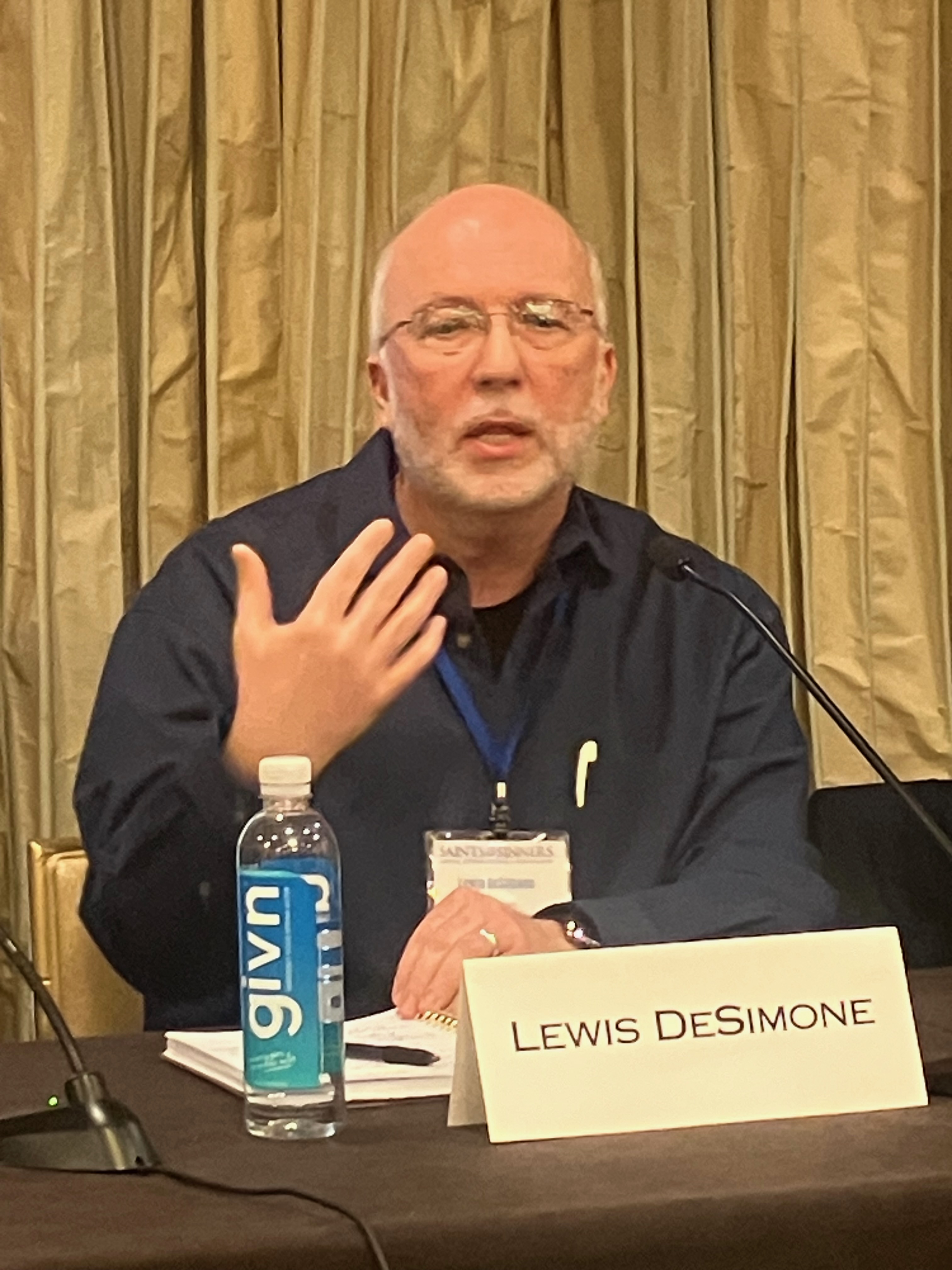
Sharing words of wisdom at the panel on Generational Change in Gay Culture and Literature
As always, the festival offered opportunities not only to reconvene with old friends but to make new ones. Writing, of course, is by definition a lonely activity, and it’s also a widely misunderstood one. That fact was underscored for me by an incident at the hotel bar the day before the festival officially began.
A few stools down from me, a thirtyish man was networking to his heart’s content, chatting up the bartender and other patrons, telling each one about his new law practice. He was looking for leads to build up his client base. When a middle-aged woman took the seat beside him, he launched into his spiel and asked what she was doing in town. She told him she was a writer attending the festival. He grew excited and took the opportunity to ask her what sort of work her attorney did for her. She laughed and said she didn’t have an attorney. This he could not fathom. “You’re a writer and you don’t have a lawyer?” “Believe me,” she said, “with the amount of money I make from my books, it wouldn’t be worth a lawyer’s time.”
The conversation encapsulated the misperceptions writers face in the world and why we need our own community for sustenance. At the festival, I was surrounded by people who got it, who understood that the majority of us will never make a living from our writing. They understood that the pleasure of creativity is our primary motivation. Some people write to make money, but the majority of us write out of love.
And for the weekend, we came together as a tribe—commiserating about our challenges, sharing tips on publishing and promotion, honoring one another’s efforts. And most of all, encouraging our peers to keep going.
I came away with a renewed commitment to my work. I even found inspiration for a major development in a piece I’ve been struggling with for ages. Such is the power of community in the creative process.
It’s official! My latest novel, Exit Wounds, will be published by Rebel Satori Press on July 23!
Exit Wounds focuses on a group of 50ish gay men in San Francisco—between the original AIDS generation and millennials—who are now dealing with middle age and the decline of the cultural touchstones that once defined gay life. Having lived in San Francisco—and the Castro, in particular—for nearly 25 years, I saw its transformation firsthand. While the book addresses recent changes, for good or ill, it does so with a nostalgic look at what has been lost in the process.
Craig Amundsen’s world is in a state of flux—or, as he sees it, falling apart. Settling into his 50s, he feels less and less a part of his beloved San Francisco, as the gay mecca gives way to tech bros and overpriced real estate. In the wake of a failed relationship and on the cusp of losing a job he loves, Craig jumps at the chance for jury duty, if only as a diversion from his own problems. The trial challenges his assumptions about the world around him, ultimately revealing a way toward embracing the inevitability of change—and even the possibility of love.
Exit Wounds examines the challenges of aging in a youth-centered culture, with a playful sense of humor and a touch of romance. I hope you enjoy!
At this year’s Saints and Sinners literary festival, an annual gathering of LGBT writers and readers in New Orleans, I was asked to participate on a panel about love. The panel’s primary question was whether marriage equality would kill the gay romance novel. Romance, of course—in both literature and life—thrives on obstacles. Once you remove the obstacles, the panel was asked, what are you left with?
The question is a bit of a straw man. After all, straight people have been getting married for centuries, and that hasn’t afflicted Danielle Steel with writer’s block.
I felt like a bit of a ringer on the panel. I don’t write romance novels per se—where romance is defined as boy meets boy, boy loses boy, boy gets boy in the end (well, maybe that last part). While my work does typically focus on love, I’m more interested in what happens after happily-ever-after. For me, Act 2 of Into the Woods offers the better music.
So, in preparing for the panel, I had to look beyond the question of the romance plot. It seemed to me that we were really engaging with a much larger question: how literature reflects the way we live at any given moment, and its responsibility to portray how we used to live, and how we should strive to live in the future.
It takes time for art to catch up with life, at least on a wide scale. For a long time gay fiction was stuck in the adolescent phase of coming-out and cruising stories, even as gay people in the real world were assimilating more and more into mainstream culture.
The turning point, tragically, was AIDS. Nothing makes a person—or a people, or a literary canon—grow up faster than confronting mortality. While AIDS was and remains a horrible truth, it is also worth noting that the pandemic vastly increased the visibility of the gay community and paved the way for many of the gains we have seen since. The struggle against HIV humanized us in the eyes of the mainstream and forced them to look at us as people rather than just practitioners of sex acts they found distasteful.
It also gave us something new to write about. With deadly serious subject matter, gay literature could be deadly serious, too.
So at first, gay people fooled around in fiction. Then they died. And now they’re getting married.
Not that they weren’t doing that all along, albeit without the license and the matching rings from Tiffany. It’s possible—even likely, I daresay—that committed gay relationships are no more common now than they were 30 years ago. But now that legal recognition exists, people are talking about them a lot more. And, finally, writing and reading about them, as well.
As Stendahl said, literature holds up a mirror to society. And so gay literature reflects the current storyline. But it doesn’t have to condone it.
The real danger of the marriage plot (or should I say, the dangerous plot behind the marriage plot) is that our literature will become heteronormative, that gay novels will now posit marriage as the expected norm and marginalize other ways of living and thereby other plots. The role of art, however, is to challenge mainstream notions, not to surrender to them. This isn’t to say that marriage, or military service, or moving to the suburbs aren’t viable options. But they’re just options, among many.
Art is a powerful thing. It not only reflects society, but has the ability to influence it. We need to make sure that we have among us the gay equivalents of Emily Brontë and George Eliot, women who refused to give in to the straight marriage plot that dominated Victorian literature and life. So long as gay literature continues to show the full panoply of the LGBT world—the diversity of the community in terms of both essence and behavior—it will live up to that responsibility. Our job as writers is to remember that, as we embark upon a brave new world, we must also reflect the world from which we came and honor it with our words as well as our lives.

 Lewis DeSimone