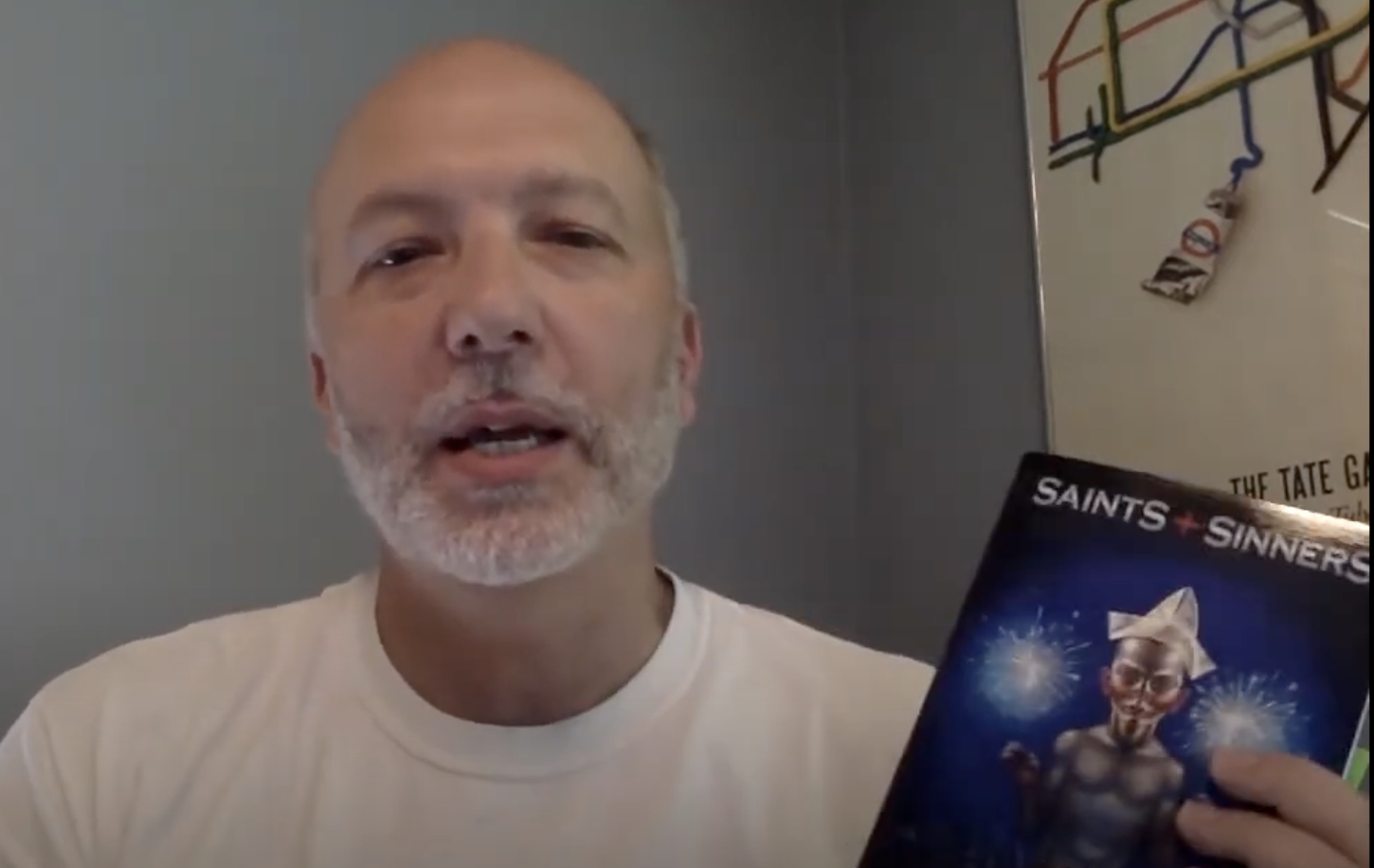
A bit of a blast from the past. The annual Saints & Sinners Literary Festival holds a contest for short fiction. At the 2021 festival, I was named a runner-up for my story “Mesopotamia.” Unfortunately, the festival didn’t happen that year because of the pandemic. So in place of the usual in-person reading, a number of writers contributed to a group video, which is available on youtube.
My story for the contest later became the opening chapter of Exit Wounds. I thought it would be fun to share the reading with you now that the book is out. So if you haven’t heard me read in person, here’s the next best thing.
My reading begins around the 5:00 minute mark on the linked video. And I’m sure you’ll be interested in hearing others, as well. Enjoy!
Since my own jury experience, more than 10 years ago now, I’ve found myself drawn to the high-profile trials that increasingly litter my newsfeed. In 2021 I was riveted to the Derek Chauvin trial, watching from gavel to gavel when I was supposed to be “working from home” (to be honest, it was a slow period at the office). I dabbled in the Alex Murdaugh trial, as well as Gwyneth Paltrow’s lawsuit (that one could have been mistaken for a sitcom), and even—ever so briefly—the train wreck of Johnny Depp v. Amber Heard.
Most recently, my obsession drifted toward Karen Read, whom I’d first heard about in an Atlantic article about Turtleboy, her most ardent and somewhat ridiculous fan. I watched the one-sided Max documentary, and wondered if it was a PR stunt for the retrial or a pilot for Read’s second career as yet another narcissistic reality-TV star. Once the new trial was under way, I grabbed pieces of it off youtube, having little patience for the daily grind. What I saw threw me back to my initial jury experience, which had set the stage for the fictional trial in my novel Exit Wounds.
My first thought, in the aftermath of Read’s acquittal, was that yet again, a jury had had a hard time trusting circumstantial evidence. If no witness saw the crime with their own eyes—or documented it on social media—many juries seem to struggle against even a mountain of evidence.
My second thought was, This all sounds too familiar. Watching scenes from the trial, I was reminded of other criminal cases that got caught up in conspiracy theories:
Russia, Russia, Russia: Read’s defense attorney, Alan Jackson, began his closing argument with a simple phrase (repeated): “No collision. No collision. No collision.” Change one vowel and we’re back in the Mueller investigation. I don’t know about you, but if I were on trial in bright blue Massachusetts, the last thing I’d want to do is associate myself with Donald Trump.
If the glove don’t fit: Despite a mound of evidence and the defendant’s own words, her defense relied on seeding doubt by casting blame elsewhere. Apparently they thought it was easier to believe that evidence was planted by Canton’s version of Mark Fuhrman. And they tied it all up with a bow by having a victorious Read state on the courthouse steps, “No one has fought harder for justice for John O’Keefe than I have.” If O.J. were still alive, he might join with her to find “the real killers.”
Maybe I’m old-fashioned, but my gut rebels against conspiracy theories; as a rule, they don’t pass the logic test.
Sherlock the Cat inspecting pawprints in the snow
First of all, the idea of all that digital evidence—notably, the black box in Read’s car and the health app on O’Keefe’s phone—lining up by chance is a bit of a stretch. My favorite piece of evidence, though, is one statement Read made in a Datelineinterview: “He didn’t look mortally wounded as far as I could see.” (Excuse me, what?)
Second, I wonder how many people would have to be involved in order for Jackson’s theory to be true. The more conspirators there are, the more fragile the bond. I wasn’t on the Read jury. I didn’t see or hear all the evidence, so I’m not arguing that Read was guilty. In fact, as I listened to Jackson’s closing, I found myself struck by many points (pardon the pun). It wasn’t that I believed the conspiracy per se, but he did plant enough doubt in my mind that I imagine, as a juror, I would have had to think long and hard about conviction. From my distant perspective, I think the most likely answer is that Read backed her car up in a huff, accidentally hit him, and had no idea that she had. That’s not exactly “not guilty” of manslaughter, but it skates the line.
All that said, I’m not ready to reject the verdict. But it still makes me a bit queasy.
I have to wonder what this verdict, like the 1995 O.J. abomination, suggests in a broader sense about celebrity, confirmation bias, and the human struggle between reason and emotion. It seems obvious now that the O.J. jury wanted to believe he’d been framed. The race card worked. In Read’s case, the defense took the strategy even further: not only did the police plant evidence; they actually committed the murder.
Studies have shown that, despite conventional thinking, circumstantial evidence is more reliable than direct (i.e., eyewitness) evidence. People don’t see everything clearly. People don’t remember very well. Data, on the other hand, doesn’t change its mind. It can be interpreted differently, but the data, for lack of a better word, is the data.
One of my co-jurors in that long-ago case was obsessed with the concept of reasonable doubt. The only problem was that he had no idea what it meant. He would bark the phrase out like a mantra to support his obstinance, but his arguments proved time and again that he was confusing it with “shadow of a doubt.” The rest of us were unable to disabuse him of this notion. And, like Auntie Mame the morning after a raucous party, the jury was hung.
We live in a time of conspiracy theories and willful ignorance. Democratic pedophiles in a pizza parlor. Microchips in vaccines programmed to cause autism. A stolen election. A love-in at the Capitol that just happened to include a noose for the vice president. A crowd of 700 protesters in the nation’s second largest city who need the Marines to keep them in check.
I spoke with a family member recently who tried to convince me that Nancy Pelosi orchestrated January 6 to make Trump “look bad.” When I pressed him, he fell back on the idea that “we don’t know everything,” essentially arguing that objective reality is a myth. Maybe Pelosi spearheaded the whole thing. Maybe Marjorie Taylor Greene is a genius. Maybe there’s a leprechaun on the dark side of the moon. Nobody knows for sure.
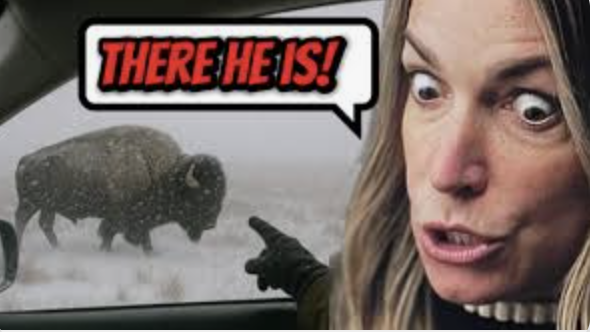
And the mountain of evidence to the contrary? Maybe that’s just a buffalo on the prairie.
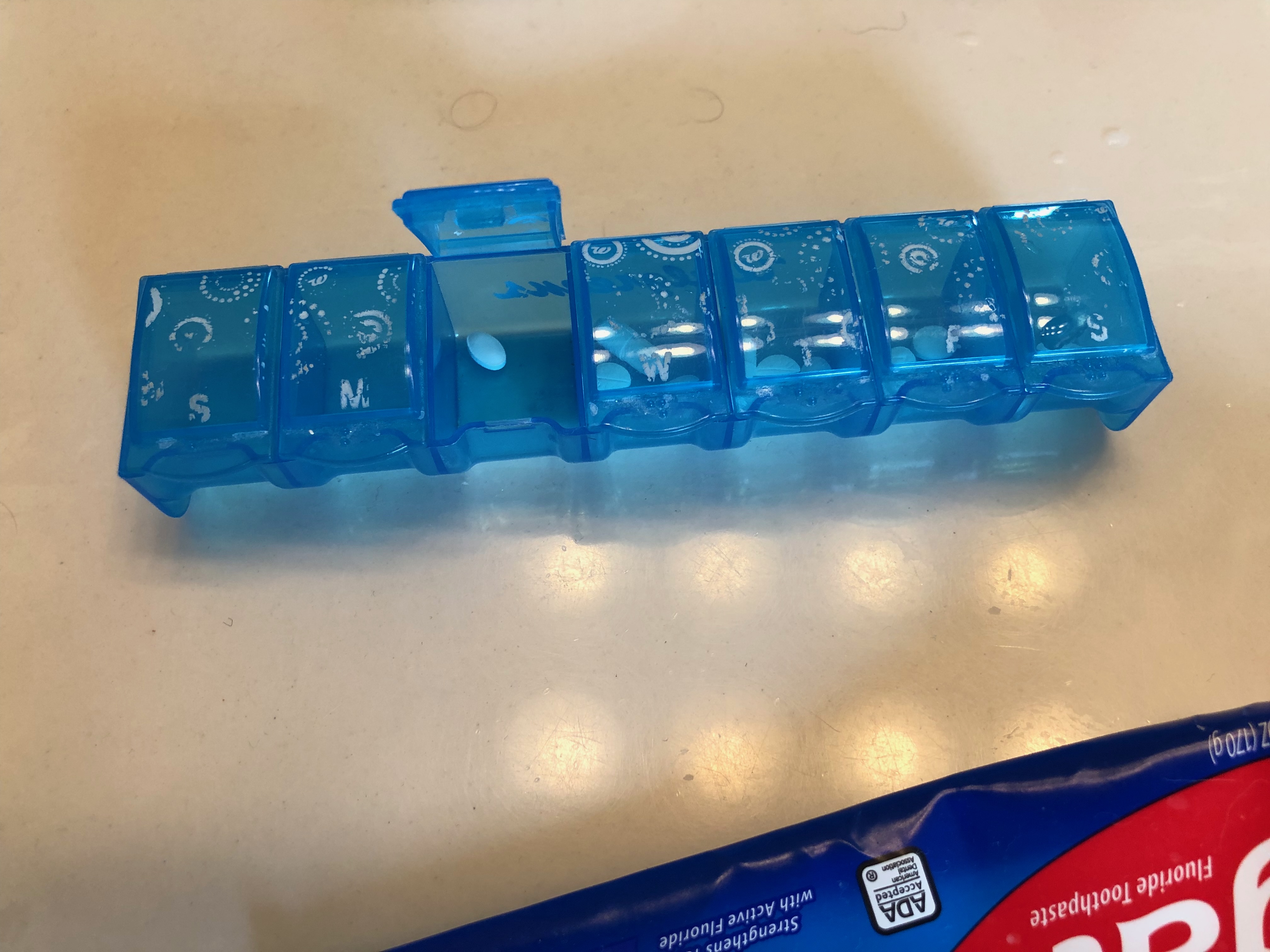
We used to have martinis on Monday evenings as consolation for beginning a new week, and again on Fridays, to celebrate having survived it.
Wednesday was Hump Day, the beginning of the much-craved slide toward the weekend. And the weekend, of course, was what it was all about.
I’ve been retired for more than a year now, and one of the strangest things to get used to is the absence of those markers. I no longer dread Mondays because they’re no different from Tuesdays. In fact, the sole day of the week that stands out now is Sunday—and that’s only because the New York Times shows up on my doorstep. (Side note: Martinis are still a twice-weekly event. At least.)
For the longest time, I looked forward to retirement. That’s what I was working for, I told myself. Along the way I imagined all the things I’d do when the time finally came—the new hobbies I’d start, the places I’d go. Half of my bucket list was designated for post-career activities. Most of all, though, I pictured retirement as the time when I would be free to write.
How a retiree tells one day from another
The most common question I get at readings is whether I have a ritual for writing. Everyone seems interested in how a writer squeezes in the time. The truth, for me, was that while I wanted to write every day—to be one of those mythical creatures who get up in early-morning darkness and dash off a few pages before heading to the office—when it came right down to it, there were too many other things going on. So I basically wrote my first few novels on Saturdays (which explains why so much time passed between publication dates).
Now that’s all changed. In theory, at least. I do write every day, if only for an hour or two. (The concept of being a “full-time” writer has never really appealed to me. Kafka was crazy enough with a day job; imagine if he’d sat alone in a studio for eight solid hours.)
Exit Woundswas written in less than a year—a record for me. It’s not spilling out the words I find difficult. The time-consuming part is revision. That’s where most of the work is, and frankly, most of the fun. The manuscript becomes a bit of a puzzle at that point, and my job is to rearrange the pieces, or add more, or cut some, until it all makes sense.
I once wanted a career as a writer, but over the years I’ve come to embrace writing as an avocation—if only because making a living at it isn’t in the cards for the vast majority of us scribes. And even in retirement, that’s what it is. I don’t want to think of writing as a “job”—that connotes drudgery. When writing stops being fun, it stops, period. Like my newer hobbies—gardening, wine tasting, bridge—writing has to be done for joy. Otherwise, I don’t have time for it.
Many years ago, I was waiting for a friend in the lobby of the New York City Opera when a passing lady mistook me for the famous bass-baritone Samuel Ramey.
Well, actually, that’s not entirely true. The woman approached and told me I looked like Mr. Ramey. I shook my head with a flattered smile, and said she was mistaken. “No,” she said archly, “I didn’t think you were Samuel Ramey. I just said you looked like him.”
There’s a big difference between being someone and being similar to him. So, in that spirit, let me state clearly that I am not Craig Amundsen. I just play him in a book.
Craig is the first-person narrator of Exit Wounds, my recent novel. Like the book, he is a work of fiction. But try telling that to some of my readers:
“I love the scene where you dump your boyfriend.” (While I’ve dumped a boyfriend or two, it never happened the way it does in the book.)
“I felt so bad when you lost your job.” (I never worked in a bookstore, let alone was laid off from one.)
I suppose I should take it as a compliment. Perhaps the assumption that Craig is really me is evidence that he comes across as an authentic person and not just a cardboard cut-out. Nevertheless, there’s something creepy about being mistaken for an imaginary being.
These comments, of course, have so far come from friends, people who know me well enough to catch some of the true-to-life references in the book and to imagine me in the role of Craig or any of my other narrators. But I do have to wonder what other people think: Do all readers assume that a first-person narrator is a stand-in for the author? That Melville was in a shipwreck and floated to safety on a coffin? That Charlotte Brontë’s boss kept his wife in the attic? That Nabokov was a pedophile?
Every book has a narrator, of course; the third-person kind just gets to slide by unnoticed. It’s still a person, and may even be a character observing the story. It’s not always a god looking down as she manipulates her hapless characters. But if she communicates the story to you as an I, a personal bond is forged between narrator and reader (spoiler alert: this is often precisely what the writer is hoping for).
Perhaps contemporary readers are more likely to mistake the narrator for the author because of the dominance of memoir in the market these days. Readers are told to believe that everything in a memoir is factual (even dialogue and detailed memories from childhood), so they may have a Pavlovian reaction: if you see an I, then automatically believe what it says.
The truth is that no book is or can be a perfect representation of real life. No matter how much the story or character has in common with the author, nearly everything is modified in some way—for clarity, to elucidate a theme, or “to protect the innocent,” as they used to say on Dragnet. I would posit that this process is no less common in the highly problematic genre of memoir, but that’s a subject for another time.
It always seems to come down to the crucial difference between fact (what happened) and truth (what it means): writers should be primarily concerned with the latter. When necessary, we use fact to illustrate that truth—but still, everything is filtered through the imagination.
So yes, some of the events in my work are based on my own experience. Some of the characters’ personalities (narrator or not) are inspired by mine. Like Craig, I lived in the Castro for many years and served as a juror on a case much like his. But I never ran a bookstore, I didn’t go to Stanford, and I’m not from the Midwest. On the other hand, I’ve spent a lot of time in bookstores; I’ve visited Stanford; and I moved to Minnesota in my fifties. All those things helped me paint a picture of Craig’s life, but his lived experience is not mine. No more than Samuel Ramey’s marvelous voice.
There’s nothing quite like hometown validation. Exit Wounds just received a rave review in San Francisco’s Bay Area Reporter. I’m thrilled by the kind words of the reviewer, Jim Piechota:
‘Exit Wounds’ by Lewis DeSimone, $21.95 (Rebel Satori Press) Mining the sensitive topics of aging, culture decline, and the tentativeness and precariousness of modern gay life, novelist and former San Franciscan Lewis DeSimone’s latest book chronicles Craig Amundsen, a gay San Francisco man who wrestles with living life in the big city with a cruel demographic that seemed to be skewing younger and younger.
DeSimone taps into the reality of life in the Bay Area with its regal real estate market, tech obsession, ever-widening generational disparities, and a self-absorbed atmosphere that makes his protagonist feel even more isolated amidst a recent break up and a job with a shaky shelf life.
As one particularly jaded character laments on gay life in the Castro: “It’s the culture that’s dying…men our age belong in the suburbs.”
With just the right combination of realistic dialogue, barbed criticisms, dark humor, and engrossing plot and narration, DeSimone has, as he has with his former books, hit the sweet spot in this immersive tale of aging gay men, the pains and pleasures of jury duty, and the myriad ways in which queers coexist, attempt to stay sane, retain happiness, and, against a barrage of barriers, thrive. This is a seamless, impressively written love letter to San Francisco and the vibrant, colorful tapestry of communities which make it tick.
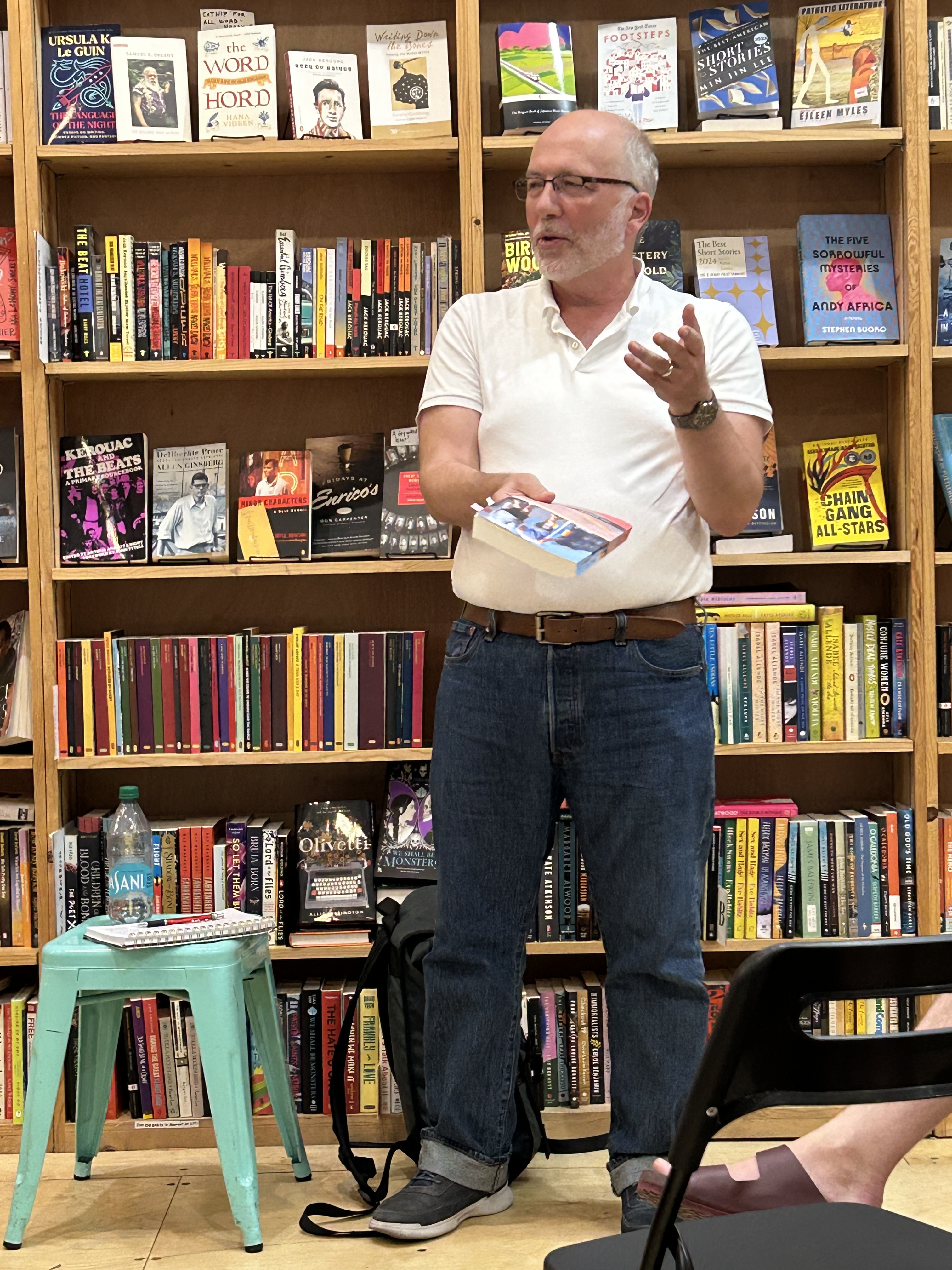
I recently visited San Francisco to promote Exit Wounds at the aptly named Fabulosa Books in the Castro. My favorite part of any book event is the Q&A. That night, the audience and I had a lively discussion about the issues raised by the novel, and it quickly became clear that I had touched a nerve.
Most of the audience had lived in San Francisco for several years and well understood the concerns expressed by the book’s characters—the higher cost of living, generational disconnects, the loss of cultural touchstones. But beyond those practical concerns, we also seemed to share a nostalgia for what our lives had been like when we first arrived in the city.
Studies suggest that the music you listened to in your teens remains your favorite throughout your life. There’s something about the formative years that makes those early feelings and tastes indelible. You could say that Joni Mitchell and James Taylor, as much as my genetics or my schooling, made me who I am.
I think something similar happened when I moved to San Francisco at the age 31—well beyond the formative years, but crucial nonetheless. I chose a place that reflected who I wanted to be, as much as Sweet Baby James had 15 years before.
Ironically, part of that vision was the dynamic nature of the city, a place that questioned convention and always welcomed the new. When I was new, it welcomed me, too. Like the cat I adopted at a shelter (and to whom Exit Wounds is dedicated), San Francisco chose me as much as I chose it.
But somewhere along the way, we outgrew one another—San Francisco by continuing to embrace, and even drive, change; me, by realizing enough of my goals to be ready to step off the roller coaster.
After the visit, I discovered that the phenomenon was wider-ranging than I’d assumed. As I spoke to Minnesotans—gay and straight, male and female—I learned that the book resonated just as strongly here. The way the novel’s characters feel about San Francisco reflects the way long-term residents often feel about Minneapolis—and maybe any dynamic city. Perhaps, I thought, it’s less about how the place develops than how the individual does, or how quickly we reach a sense of contentment that makes further change less appealing. That may even be a goal for many of us: to find the sweet spot and stay there.
So many stories, whether on the page or in real life, are about the attempt to “find” oneself. But what happens when you’ve finally found it? I’m still asking that question.
If you’re in the Bay Area, please join me on October 1, 2024 at 7:00 p.m., when I’ll be reading at Fabulosa Books (489 Castro Street).
I’m thrilled to be returning to San Francisco, the place where Exit Wounds is set. The city itself is at the core of the story. And let’s just say that Tony Bennett isn’t the only person who left his heart in those gorgeous hills.
For 16 years, I lived on this corner, right behind that enormous Norwegian spruce. Can’t wait to see the old neighborhood.
“How did you go bankrupt?” Bill asked. “Two ways,” Mike said. “Gradually and then suddenly.” —Ernest Hemingway, The Sun Also Rises
Every process has a tipping point, I guess—the moment at which everything seems to click into place or fall apart. Take aging, for example. At first—when you’re a child, a teenager, even well into your twenties—you simply can’t imagine it. Then, in your thirties, your hair may start to turn gray or thin out, or the cellulite starts building up in your thighs. But such changes don’t get in the way of anything you want to do, and the youthful energy and optimism are still intact.
In my forties, the changes were still gradual, if a bit more noticeable—the minor differences in stamina and metabolism, the telltale crow’s feet around my eyes. But these differences paled in comparison to the things that were better in that decade: career success, home ownership, an active social life. I finally understood what Jean Brodie had meant by her prime, a concept that had puzzled me when I first saw the movie as a kid. I loved my forties because age was beginning to bring with it wisdom, confidence, and the ability to not care what other people thought.
And then, like Hemingway’s proverbial bankruptcy, 50 hit with a thud. Maybe it was just the drama of it—the notices from AARP that started cramming my mailbox, the birthday party where friends threatened to bring out a fire extinguisher for the candles—but suddenly I could no longer ignore the slow-down in pretty much everything. After the initial shock, though, things did level off, though the plateau was a lot lower than it had been.
It wasn’t until 60 that the aches and pains started. And then, of course—adding insult to injury—it got distinctly harder to burn off the burgers and ice cream. Like someone in the bargaining stage of grief, I started contemplating trade-offs: Maybe if I just exercised more, or drank less, or threw out the Dove bars. Or maybe I could live with the extra 10 pounds, just consider them the price of doing business—business being happy hour martinis and a decent dessert now and then.
So I’m at the next plateau now, and hoping this one will last a while. Unless I’m using the wrong metaphor, and aging is really more like the proverbial frog in a pan of hot water who doesn’t recognize the increasing temperature until it’s too late. For now, I’m seeing each stage (if not each new backache) as a chance to recalibrate and a reminder to appreciate the view and hold on tight before the next one hits.
When the verdict came down for a certain felon in New York on Thursday, I found myself instantly thinking less about the defendant, the lawyers, or the witnesses, than about the 12 women and men who had the heavy task of making the historic decision to convict.
Serving as a juror is an awesome responsibility. Until I got selected for a case in California several years ago, I felt no different than the mass of people who dread the task as much as death and taxes. But once the trial got under way, I was riveted. The technical testimony brought out the nerd in me (I learned more than I’d ever wanted to know about gunshot wounds and powder residue), and the witness testimony was as intriguing as a soap opera. But what I found most interesting was the judicial process—how evidence was introduced, how the prosecution constructed a narrative, how the defense tried to poke holes in it.
My jury experience inspired the court case at the center of my new novel, Exit Wounds, but the freedom of fiction enabled me to add some drama here and there, and put it all into a larger context.
As fascinating as a trial can be—particularly for jurors, who must pay careful attention to everything—deliberation is somewhat terrifying. As I waited for the Trump jury to deliver their verdict this week, I imagined them having the same types of arguments my own jury had had: questions about the credibility of witnesses, the definition of reasonable doubt, and how much evidence is enough. The weight of a decision that affects another person’s life causes a surprising amount of stress. In the current case, I would say it also required a substantial amount of courage. Those 12 people made a difficult decision under unprecedented circumstances, and we should be deeply grateful for their perseverance and sense of civic duty.
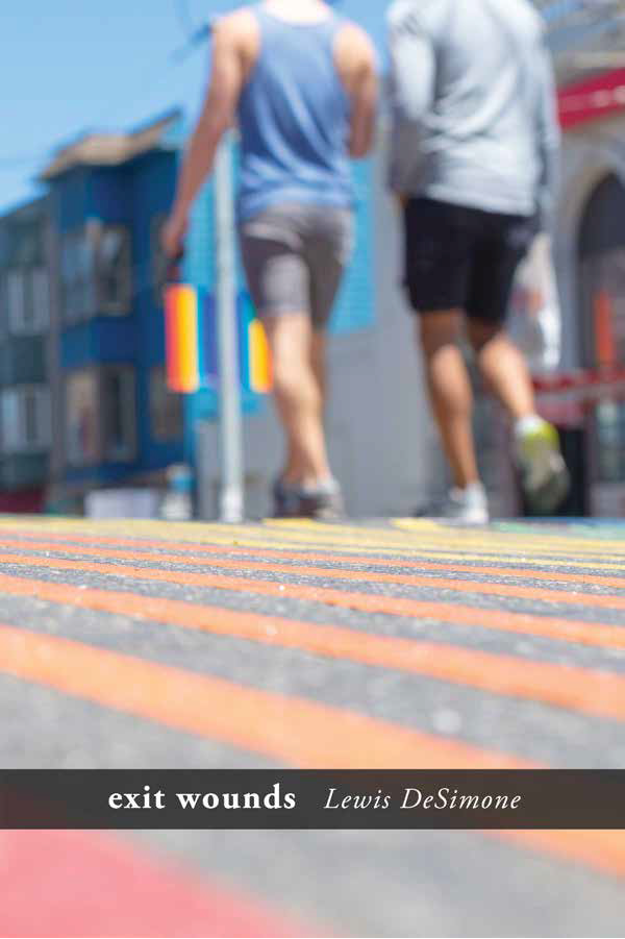
It’s official! My latest novel, Exit Wounds, will be published by Rebel Satori Press on July 23!
Exit Wounds focuses on a group of 50ish gay men in San Francisco—between the original AIDS generation and millennials—who are now dealing with middle age and the decline of the cultural touchstones that once defined gay life. Having lived in San Francisco—and the Castro, in particular—for nearly 25 years, I saw its transformation firsthand. While the book addresses recent changes, for good or ill, it does so with a nostalgic look at what has been lost in the process.
Craig Amundsen’s world is in a state of flux—or, as he sees it, falling apart. Settling into his 50s, he feels less and less a part of his beloved San Francisco, as the gay mecca gives way to tech bros and overpriced real estate. In the wake of a failed relationship and on the cusp of losing a job he loves, Craig jumps at the chance for jury duty, if only as a diversion from his own problems. The trial challenges his assumptions about the world around him, ultimately revealing a way toward embracing the inevitability of change—and even the possibility of love.
Exit Wounds examines the challenges of aging in a youth-centered culture, with a playful sense of humor and a touch of romance. I hope you enjoy!





 Lewis DeSimone