The Jury Has Spoken

When the verdict came down for a certain felon in New York on Thursday, I found myself instantly thinking less about the defendant, the lawyers, or the witnesses, than about the 12 women and men who had the heavy task of making the historic decision to convict.
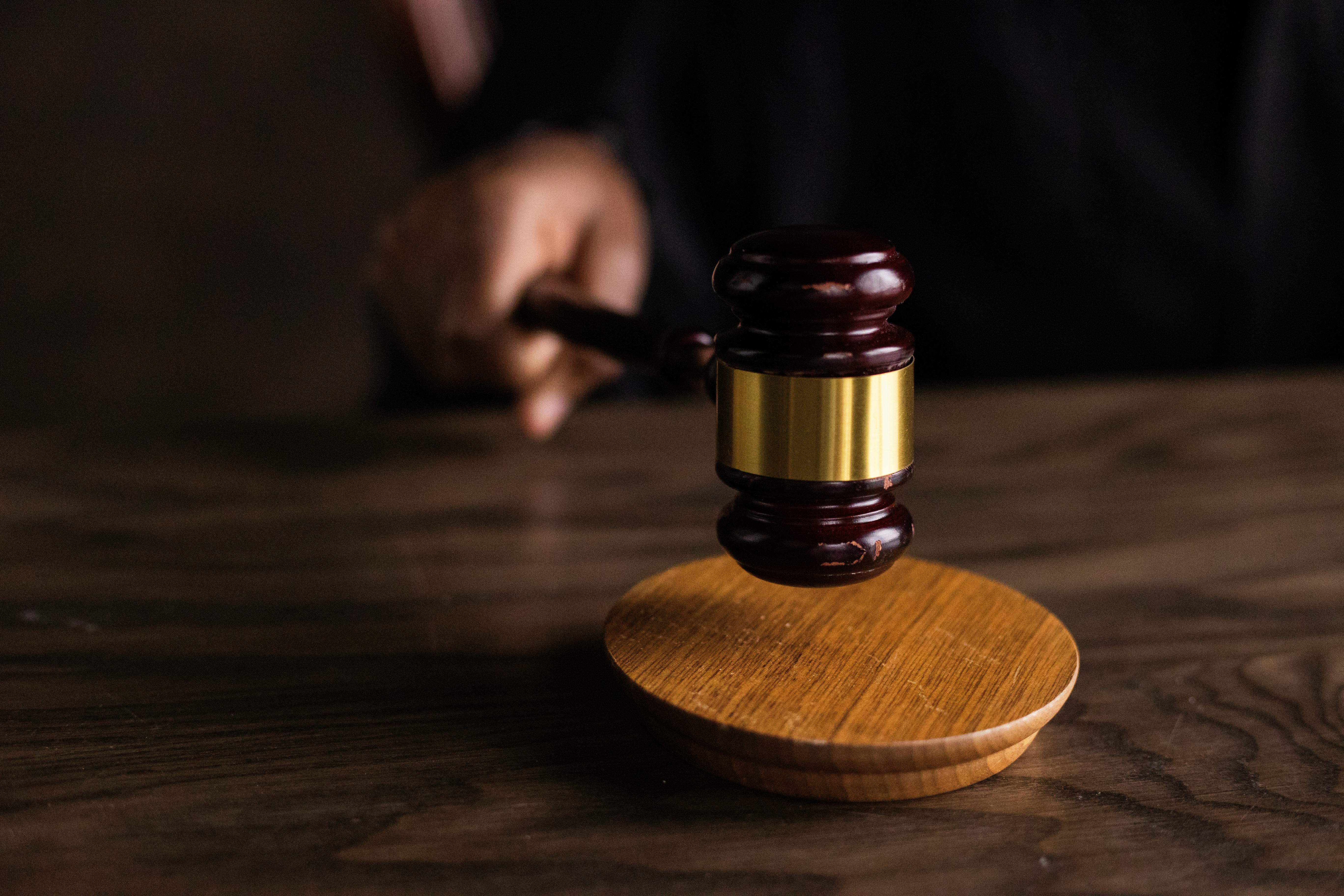
Serving as a juror is an awesome responsibility. Until I got selected for a case in California several years ago, I felt no different than the mass of people who dread the task as much as death and taxes. But once the trial got under way, I was riveted. The technical testimony brought out the nerd in me (I learned more than I’d ever wanted to know about gunshot wounds and powder residue), and the witness testimony was as intriguing as a soap opera. But what I found most interesting was the judicial process—how evidence was introduced, how the prosecution constructed a narrative, how the defense tried to poke holes in it.

My jury experience inspired the court case at the center of my new novel, Exit Wounds, but the freedom of fiction enabled me to add some drama here and there, and put it all into a larger context.

As fascinating as a trial can be—particularly for jurors, who must pay careful attention to everything—deliberation is somewhat terrifying. As I waited for the Trump jury to deliver their verdict this week, I imagined them having the same types of arguments my own jury had had: questions about the credibility of witnesses, the definition of reasonable doubt, and how much evidence is enough. The weight of a decision that affects another person’s life causes a surprising amount of stress. In the current case, I would say it also required a substantial amount of courage. Those 12 people made a difficult decision under unprecedented circumstances, and we should be deeply grateful for their perseverance and sense of civic duty.

Donald Trump Is Killing Me

I never call him “President.” I don’t even like to use his actual name. I prefer to refer to him as the Orange Menace, Hitler Lite, Dump, or—my new favorite—the Unindicted Co-conspirator.

But whatever I call him, it doesn’t change the fact that he’s killing me. And I don’t mean in the sense you use to praise a favorite comedian: “Stop it, Joan Rivers, you’re killing me!” No, I mean it literally. My mental and physical health have not been the same since November 8, 2016. The anxiety, the sleepless nights, the daily stress of keeping up with his alternately cruel and incompetent antics—have had tangible effects.

My stomach is in knots half the time, and my ability to deal with day-to-day stress—you know, real life, like traffic jams and the lid that refuses to come off the pickle jar—have been known to send me over the edge. And I can’t tell you how many hours I have donated to Morpheus that really should belong to me.

I wouldn’t be surprised to find out that Donald Trump is shaving days off my life expectancy every month.

And he probably likes it that way. After all, it’s not his life; it’s mine. And clearly he doesn’t care much about anyone’s life but his own.

People tell me to chill out, to get off the Internet, stop watching Rachel Maddow, stop reading the Times. And if my health were the only concern, they’d be right.

But that’s part of the grand scheme, isn’t it? The intent of these people (and it’s not just Trump; one man could not do all this shit by himself, even if he weren’t a certified idiot) is to wear us down. So we must stay vigilant, right? Or maybe we should just take turns being vigilant. Like campers, or soldiers in foxholes who take shifts guarding against danger.

You watch MSNBC for me today; I’ll watch it for you tomorrow. You unplug in Maui for the week; I’ll spend the next one in Sitjes.

Long ago I learned a valuable strategy for calming my nerves: imagine the worst-case scenario. The idea is to help you see that a) the worst-case scenario is highly unlikely; and b) it wouldn’t be so bad, anyway.

That works fine when you’re worried about not getting into the right college, or being dumped by a boyfriend. It’s less successful as an antidote to existential crises.

Personally, I imagine that my marriage will be annulled, that Social Security and Medicare will be dead by the time I’m eligible for them, that I’ll be put into a concentration camp, that nuclear bombs will go off all over the world. Those fears are in increasing order of seriousness and decreasing order of likelihood. But know this: none of them—absolutely none of them—is out of the question. Not anymore.

As the old joke goes, Just because you’re paranoid it doesn’t mean they’re not out to get you. I prefer to think about paranoia the way Pascal thought about religion: believe in it just in case.

He’s killing all of us. But only some of us are paying attention to the pain as it comes. Ignorance is bliss, but it catches up with you eventually.

The New World Disorder: A Review of Pankaj Mishra’s “Age of Anger”

In the wake of Trump’s election, there’s an awful lot of Monday-morning quarterbacking going on—from Hillary Clinton’s own memoir to articles and books full of information about how this travesty fits into a pattern. And yet, none of these alleged patterns was called out before November 9. Could it be that Trump was simply the missing jigsaw piece that suddenly made the whole picture clear? Or maybe we all saw the signs. We just didn’t believe it could get to this final level of absurdity, so we didn’t ring the alarm bells too loudly. The Berners kept up their childish idealism, the Clinton haters pretended that it was a contest between two evils. And Clinton herself may have grown too confident: her election, many people thought, was a fait accompli. When I expressed my anxiety to a friend last October, he looked at me with a shocking sense of calm. “I’m not worried,” he said. Like many, he believed Clinton would be elected because the alternative was unthinkable. And it was all moving like a well-oiled machine: people looked upon her campaign with the same sense of pride as shipmakers waving a proud farewell to the Titanic as it left port in Southampton.

Despite all the theories that have been bouncing around lately, I keep looking for an explanation that resonates. So far, Pankaj Mishra’s stimulating book, Age of Anger: A History of the Present, is as close as I’ve found to one. In fact, it explains a great deal about our contemporary world. What I especially like is the fact that Mishra focuses less on ideology than on notions of disempowerment, thereby drawing a line that connects insurgent movements from the French Revolution to ISIS to Donald Trump. He traces the phenomenon back to the 18th century. Many people point to the Enlightenment as the primary dividing mark of history, the moment when modernism (the rights of man, the death of God) began. And there’s a lot to be said for that, of course. But it was a cultural shift that didn’t bring everyone along, and still hasn’t. The crime, perhaps, is that it never has affected enough people. The freedoms unleashed by the Enlightenment were accessible primarily to elites—whether financial or intellectual—and it has remained difficult for people who aren’t blessed with money, talent, or education to get to the same point. Our failure to educate all of our people is largely at fault. If people are empowered, as they are in a democracy, they need to know what they’re doing.

Mishra doesn’t let the disempowered off the hook, though. He delves into the psychological process that’s at play here. In a word, ressentiment, Kierkegaard’s term for a combination of envy and hatred whereby one debases the very thing one wishes to become. This is the motivation of the schoolyard bully who beats up the kid with good grades, the Nazi who executes Jews, the social loser who kills pretty women who won’t sleep with him. It’s Mohammed Atta going to a strip club before he crashes a plane into a building for Allah. It’s Donald Trump berating the New York Times just to see his name in the paper he allegedly reviles.

Sadly, Mishra offers no way out. His book is an analysis of what brought us to the current moment. It doesn’t offer a convenient process for solving the problem: that’s not his point, and it would probably lessen the impact of the book. It’s for someone else to pick up the baton and figure a way out. Mishra does offer examples from the past, particularly through the dialectic of countries like France and Germany, whose histories veered so much from one end of the scale to the other over time.

But this time it may be different, because this time the problem seems to be ubiquitous. And arguably, the United States is dealing with this phenomenon for the first time in its history, at least to this degree and at this scope: Donald Trump is not the governor of Alabama, standing in a school doorway.

Mishra’s done a great job of showing us the road behind. Now all we have to do is figure out which way to go from here.


Hamlet Debates Watching Donald Trump’s Speech

To watch or not to watch, that is the question.

Whether ’tis safer for the sanity and the blood pressure to ignore

The bigotry and nonsense of this outrageous circus,

Or to take arms against a sea of crass stupidity

And by laughing, end it.  To cry, to weep–

No more–and by guffawing to say we end

This absurd union of rednecks and greed-mad narcissists,

And the million certifiable lunatics the GOP is heir to.

‘Tis a consummation secularly to be wished. To cry, to sleep–

To sleep, perchance to dream, and find that this nightmare

Is nothing more than the fear and small-handedness

That tyrants are made on.