First-Person Problems

Many years ago, I was waiting for a friend in the lobby of the New York City Opera when a passing lady mistook me for the famous bass-baritone Samuel Ramey.

Well, actually, that’s not entirely true. The woman approached and told me I looked like Mr. Ramey. I shook my head with a flattered smile, and said she was mistaken. “No,” she said archly, “I didn’t think you were Samuel Ramey. I just said you looked like him.”

There’s a big difference between being someone and being similar to him. So, in that spirit, let me state clearly that I am not Craig Amundsen. I just play him in a book.

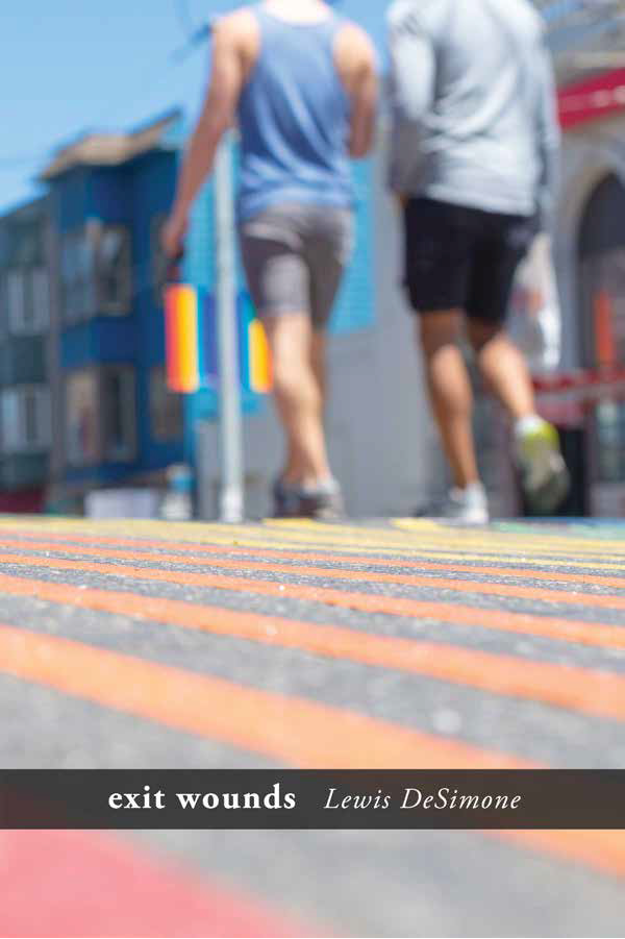
Craig is the first-person narrator of Exit Wounds, my recent novel. Like the book, he is a work of fiction. But try telling that to some of my readers:

“I love the scene where you dump your boyfriend.” (While I’ve dumped a boyfriend or two, it never happened the way it does in the book.)

“I felt so bad when you lost your job.” (I never worked in a bookstore, let alone was laid off from one.)

I suppose I should take it as a compliment. Perhaps the assumption that Craig is really me is evidence that he comes across as an authentic person and not just a cardboard cut-out. Nevertheless, there’s something creepy about being mistaken for an imaginary being.

These comments, of course, have so far come from friends, people who know me well enough to catch some of the true-to-life references in the book and to imagine me in the role of Craig or any of my other narrators. But I do have to wonder what other people think: Do all readers assume that a first-person narrator is a stand-in for the author? That Melville was in a shipwreck and floated to safety on a coffin? That Charlotte Brontë’s boss kept his wife in the attic? That Nabokov was a pedophile?

Every book has a narrator, of course; the third-person kind just gets to slide by unnoticed. It’s still a person, and may even be a character observing the story. It’s not always a god looking down as she manipulates her hapless characters. But if she communicates the story to you as an I, a personal bond is forged between narrator and reader (spoiler alert: this is often precisely what the writer is hoping for).

Perhaps contemporary readers are more likely to mistake the narrator for the author because of the dominance of memoir in the market these days. Readers are told to believe that everything in a memoir is factual (even dialogue and detailed memories from childhood), so they may have a Pavlovian reaction: if you see an I, then automatically believe what it says.

The truth is that no book is or can be a perfect representation of real life. No matter how much the story or character has in common with the author, nearly everything is modified in some way—for clarity, to elucidate a theme, or “to protect the innocent,” as they used to say on Dragnet. I would posit that this process is no less common in the highly problematic genre of memoir, but that’s a subject for another time.

It always seems to come down to the crucial difference between fact (what happened) and truth (what it means): writers should be primarily concerned with the latter. When necessary, we use fact to illustrate that truth—but still, everything is filtered through the imagination.

So yes, some of the events in my work are based on my own experience. Some of the characters’ personalities (narrator or not) are inspired by mine. Like Craig, I lived in the Castro for many years and served as a juror on a case much like his. But I never ran a bookstore, I didn’t go to Stanford, and I’m not from the Midwest. On the other hand, I’ve spent a lot of time in bookstores; I’ve visited Stanford; and I moved to Minnesota in my fifties. All those things helped me paint a picture of Craig’s life, but his lived experience is not mine. No more than Samuel Ramey’s marvelous voice.
Bay Area Reporter Review of “Exit Wounds”

There’s nothing quite like hometown validation. Exit Wounds just received a rave review in San Francisco’s Bay Area Reporter. I’m thrilled by the kind words of the reviewer, Jim Piechota:

‘Exit Wounds’ by Lewis DeSimone, $21.95 (Rebel Satori Press)
Mining the sensitive topics of aging, culture decline, and the tentativeness and precariousness of modern gay life, novelist and former San Franciscan Lewis DeSimone’s latest book chronicles Craig Amundsen, a gay San Francisco man who wrestles with living life in the big city with a cruel demographic that seemed to be skewing younger and younger.

DeSimone taps into the reality of life in the Bay Area with its regal real estate market, tech obsession, ever-widening generational disparities, and a self-absorbed atmosphere that makes his protagonist feel even more isolated amidst a recent break up and a job with a shaky shelf life.

As one particularly jaded character laments on gay life in the Castro: “It’s the culture that’s dying…men our age belong in the suburbs.”

With just the right combination of realistic dialogue, barbed criticisms, dark humor, and engrossing plot and narration, DeSimone has, as he has with his former books, hit the sweet spot in this immersive tale of aging gay men, the pains and pleasures of jury duty, and the myriad ways in which queers coexist, attempt to stay sane, retain happiness, and, against a barrage of barriers, thrive. This is a seamless, impressively written love letter to San Francisco and the vibrant, colorful tapestry of communities which make it tick.

Can You Go Home Again? 

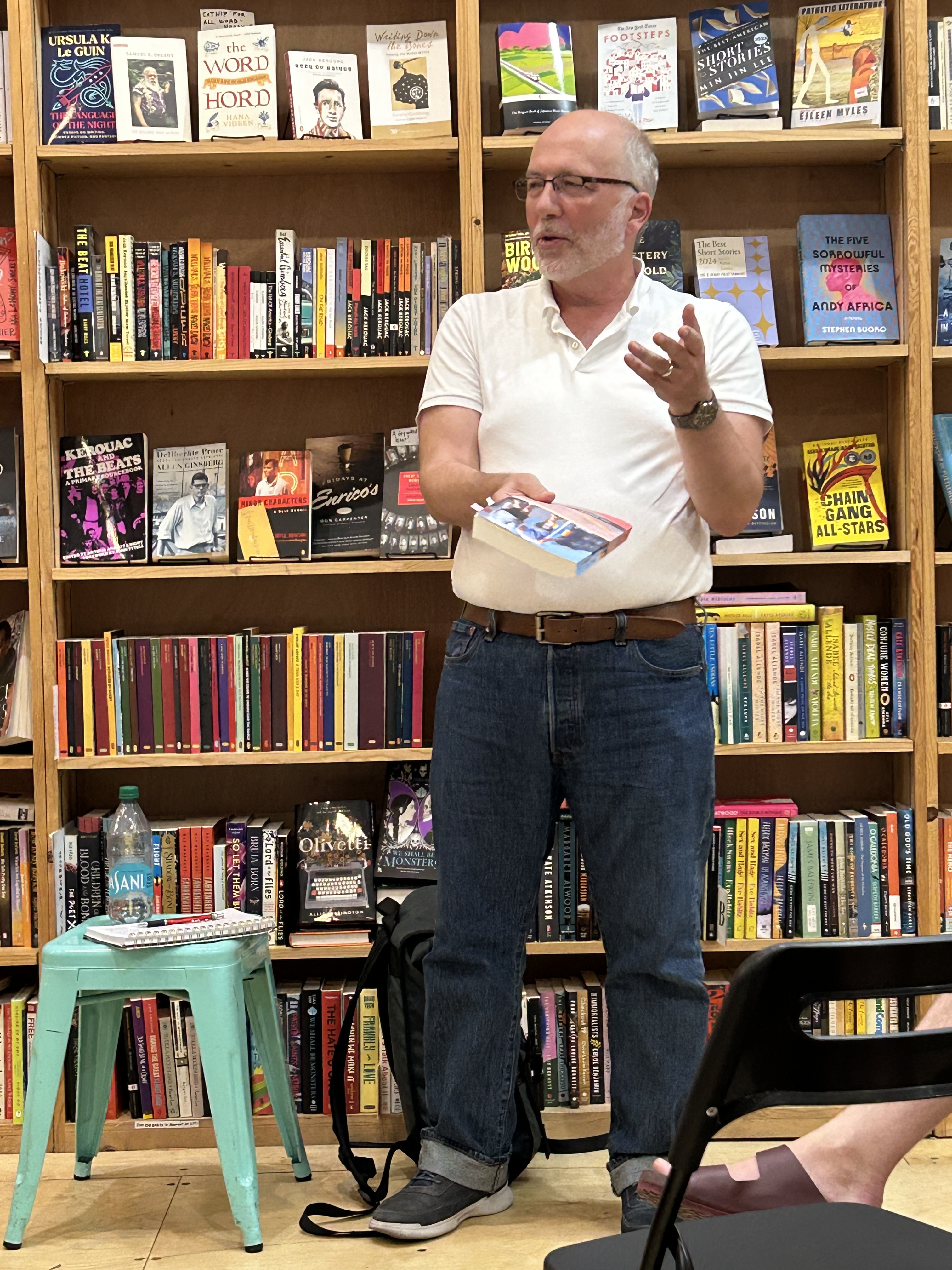
I recently visited San Francisco to promote Exit Wounds at the aptly named Fabulosa Books in the Castro. My favorite part of any book event is the Q&A. That night, the audience and I had a lively discussion about the issues raised by the novel, and it quickly became clear that I had touched a nerve.

Most of the audience had lived in San Francisco for several years and well understood the concerns expressed by the book’s characters—the higher cost of living, generational disconnects, the loss of cultural touchstones. But beyond those practical concerns, we also seemed to share a nostalgia for what our lives had been like when we first arrived in the city.

Studies suggest that the music you listened to in your teens remains your favorite throughout your life. There’s something about the formative years that makes those early feelings and tastes indelible. You could say that Joni Mitchell and James Taylor, as much as my genetics or my schooling, made me who I am.

I think something similar happened when I moved to San Francisco at the age 31—well beyond the formative years, but crucial nonetheless. I chose a place that reflected who I wanted to be, as much as Sweet Baby James had 15 years before.

Ironically, part of that vision was the dynamic nature of the city, a place that questioned convention and always welcomed the new. When I was new, it welcomed me, too. Like the cat I adopted at a shelter (and to whom Exit Wounds is dedicated), San Francisco chose me as much as I chose it.

But somewhere along the way, we outgrew one another—San Francisco by continuing to embrace, and even drive, change; me, by realizing enough of my goals to be ready to step off the roller coaster.

After the visit, I discovered that the phenomenon was wider-ranging than I’d assumed. As I spoke to Minnesotans—gay and straight, male and female—I learned that the book resonated just as strongly here. The way the novel’s characters feel about San Francisco reflects the way long-term residents often feel about Minneapolis—and maybe any dynamic city. Perhaps, I thought, it’s less about how the place develops than how the individual does, or how quickly we reach a sense of contentment that makes further change less appealing. That may even be a goal for many of us: to find the sweet spot and stay there.

So many stories, whether on the page or in real life, are about the attempt to “find” oneself. But what happens when you’ve finally found it? I’m still asking that question.

Reading in San Francisco: October 1

If you’re in the Bay Area, please join me on October 1, 2024 at 7:00 p.m., when I’ll be reading at Fabulosa Books (489 Castro Street).

I’m thrilled to be returning to San Francisco, the place where Exit Wounds is set. The city itself is at the core of the story. And let’s just say that Tony Bennett isn’t the only person who left his heart in those gorgeous hills.

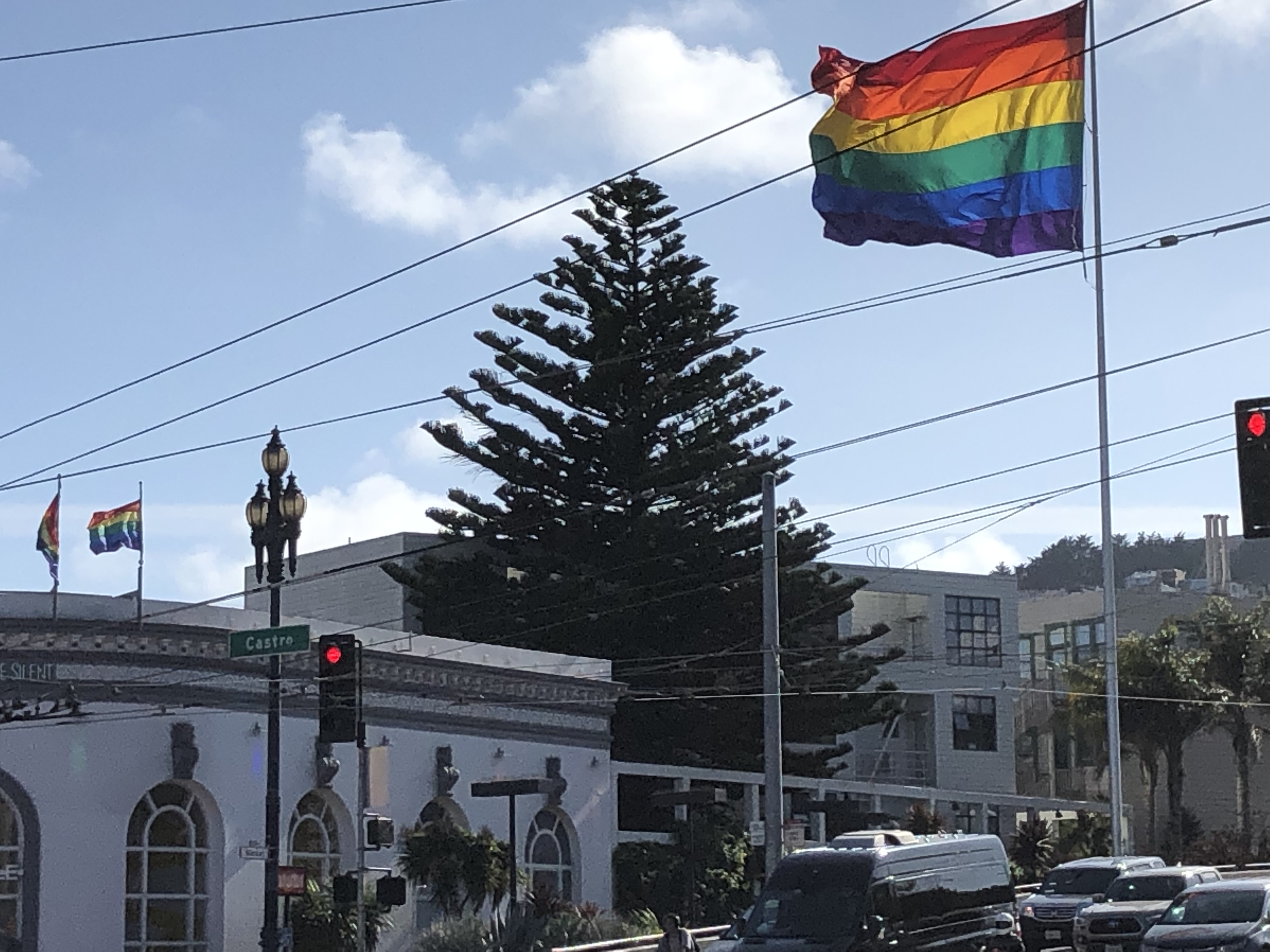
For 16 years, I lived on this corner, right behind that enormous Norwegian spruce. Can’t wait to see the old neighborhood.

Tipping Points

“How did you go bankrupt?” Bill asked.
“Two ways,” Mike said. “Gradually and then suddenly.”
—Ernest Hemingway,
The Sun Also Rises

Every process has a tipping point, I guess—the moment at which everything seems to click into place or fall apart. Take aging, for example. At first—when you’re a child, a teenager, even well into your twenties—you simply can’t imagine it. Then, in your thirties, your hair may start to turn gray or thin out, or the cellulite starts building up in your thighs. But such changes don’t get in the way of anything you want to do, and the youthful energy and optimism are still intact. 

In my forties, the changes were still gradual, if a bit more noticeable—the minor differences in stamina and metabolism, the telltale crow’s feet around my eyes. But these differences paled in comparison to the things that were better in that decade: career success, home ownership, an active social life. I finally understood what Jean Brodie had meant by her prime, a concept that had puzzled me when I first saw the movie as a kid. I loved my forties because age was beginning to bring with it wisdom, confidence, and the ability to not care what other people thought.

And then, like Hemingway’s proverbial bankruptcy, 50 hit with a thud. Maybe it was just the drama of it—the notices from AARP that started cramming my mailbox, the birthday party where friends threatened to bring out a fire extinguisher for the candles—but suddenly I could no longer ignore the slow-down in pretty much everything. After the initial shock, though, things did level off, though the plateau was a lot lower than it had been.

It wasn’t until 60 that the aches and pains started. And then, of course—adding insult to injury—it got distinctly harder to burn off the burgers and ice cream. Like someone in the bargaining stage of grief, I started contemplating trade-offs: Maybe if I just exercised more, or drank less, or threw out the Dove bars. Or maybe I could live with the extra 10 pounds, just consider them the price of doing business—business being happy hour martinis and a decent dessert now and then.

So I’m at the next plateau now, and hoping this one will last a while. Unless I’m using the wrong metaphor, and aging is really more like the proverbial frog in a pan of hot water who doesn’t recognize the increasing temperature until it’s too late. For now, I’m seeing each stage (if not each new backache) as a chance to recalibrate and a reminder to appreciate the view and hold on tight before the next one hits.

Publication Day!

Happy birthday to my new baby!

Exit Wounds is now available for purchase. I’ve been working on the book for the past couple of years, and I’m excited to finally share it with readers.

As Wordsworth famously said, “Poetry is the spontaneous overflow of powerful feelings: it takes its origin from emotion recollected in tranquility.” The same can be said of fiction.

While Exit Wounds takes place in San Francisco—a city I love and that is arguably the main character in the book—I wrote the novel from the relative tranquility of my new home in Minneapolis. The distance allowed me to see my time in San Francisco from the outside, but my love for the place has never diminished. (In case you’re wondering how I could ever leave, check Zillow for comparative real estate prices.)

Exit Wounds is a very personal story, centering on a man facing middle age and reassessing his relationship with his community. Writing it allowed me to immerse myself again in the world that was so important to me for 25 years. While those years may be physically behind me, they remain spiritually at my fingertips. I hope my love for the place comes through for you, as well.

Happy reading, friends!

The Jury Has Spoken

When the verdict came down for a certain felon in New York on Thursday, I found myself instantly thinking less about the defendant, the lawyers, or the witnesses, than about the 12 women and men who had the heavy task of making the historic decision to convict.

Serving as a juror is an awesome responsibility. Until I got selected for a case in California several years ago, I felt no different than the mass of people who dread the task as much as death and taxes. But once the trial got under way, I was riveted. The technical testimony brought out the nerd in me (I learned more than I’d ever wanted to know about gunshot wounds and powder residue), and the witness testimony was as intriguing as a soap opera. But what I found most interesting was the judicial process—how evidence was introduced, how the prosecution constructed a narrative, how the defense tried to poke holes in it.

My jury experience inspired the court case at the center of my new novel, Exit Wounds, but the freedom of fiction enabled me to add some drama here and there, and put it all into a larger context.

As fascinating as a trial can be—particularly for jurors, who must pay careful attention to everything—deliberation is somewhat terrifying. As I waited for the Trump jury to deliver their verdict this week, I imagined them having the same types of arguments my own jury had had: questions about the credibility of witnesses, the definition of reasonable doubt, and how much evidence is enough. The weight of a decision that affects another person’s life causes a surprising amount of stress. In the current case, I would say it also required a substantial amount of courage. Those 12 people made a difficult decision under unprecedented circumstances, and we should be deeply grateful for their perseverance and sense of civic duty.

Exit Wounds: New Novel to Be Released 7/23/24

It’s official! My latest novel, Exit Wounds, will be published by Rebel Satori Press on July 23!

Exit Wounds focuses on a group of 50ish gay men in San Francisco—between the original AIDS generation and millennials—who are now dealing with middle age and the decline of the cultural touchstones that once defined gay life. Having lived in San Francisco—and the Castro, in particular—for nearly 25 years, I saw its transformation firsthand. While the book addresses recent changes, for good or ill, it does so with a nostalgic look at what has been lost in the process.

Craig Amundsen’s world is in a state of flux—or, as he sees it, falling apart. Settling into his 50s, he feels less and less a part of his beloved San Francisco, as the gay mecca gives way to tech bros and overpriced real estate. In the wake of a failed relationship and on the cusp of losing a job he loves, Craig jumps at the chance for jury duty, if only as a diversion from his own problems. The trial challenges his assumptions about the world around him, ultimately revealing a way toward embracing the inevitability of change—and even the possibility of love.

Exit Wounds examines the challenges of aging in a youth-centered culture, with a playful sense of humor and a touch of romance. I hope you enjoy!

Telling Stories

As I watched the Derek Chauvin trial, almost gavel-to-gavel (another advantage to working from home), I couldn’t help thinking back to my own experience as a juror. I haven’t paid this much attention to a trial since sitting in a jury box at the federal courthouse in San Francisco. And now, in my new hometown of Minneapolis, I’m completely obsessed with a legal ritual going on just a few miles from my house.

Whether in the courtroom or watching on my laptop monitor, I was completely absorbed—oddly compelled by the most technical details. I loved seeing how the lawyers crafted a narrative out of disparate bits of information. It’s the novelist in me, I suppose. My life is all about telling stories.

Stories became a dirty word during closing arguments yesterday, with the defense objecting that the prosecution was accusing them of fabrication. And I found myself wondering about the nature of story, its complicated relationship with truth. I cringe at most memoirs, with their assertion of truth merely because the broad events of the book actually happened. Memories are so easily corrupted by interpretation: we make things better than they were to calm ourselves, we make things worse than they were to punish ourselves. I’ve always preferred novels, where there’s no expectation of verisimilitude, where you’re not limited by facts in your pursuit of truth. To me, novels are more honest.

But this isn’t a novel. This is real life. And real life comes down to facts, not stories.

The defense told its stories—the drugs killed him, his enlarged heart killed him, carbon monoxide killed him, the bystanders distracted the cops—to draw attention away from the obvious, from the knee that sat on George Floyd’s neck for 9 minutes and 29 seconds, even after he’d stopped resisting, after he’d stopped breathing, when there was no longer a pulse.

A better story would be Occam’s razor: the simplest explanation is the right one.

But all the defense needs to do is convince one juror, to give one juror a reason to support their side of things.

In my trial in San Francisco, the defense succeeded: our final vote was 10-2, and those two were immovable. Well, one might have come around, but it was quickly evident that the other never would. He was in love with the concept of reasonable doubt, though he had a hard time understanding the word reasonable. As a prosecutor in the Chauvin trial pointed out, you don’t leave common sense at the door when you enter the jury room. Jurors are laypeople specifically because they’re expected to use common sense rather than specific expertise.

At the end of our trial, the attorneys asked to speak with the jury to get our perspective on what aspects of their presentations were most successful. I used the opportunity to corner the defense attorney, telling him that the prosecution had used facts to provide a solid narrative that made sense. By contrast, all he’d done was try to punch holes in theirs. In so many words, he replied, “That was all I had.”

I won’t bother you here with the details of my experience as a juror. It inspired a major plotline in my next novel, so I’ll save it for that. But now, as I watch my city and my country sit in anxiety over the outcome of this case, I feel a bit of PTSD.

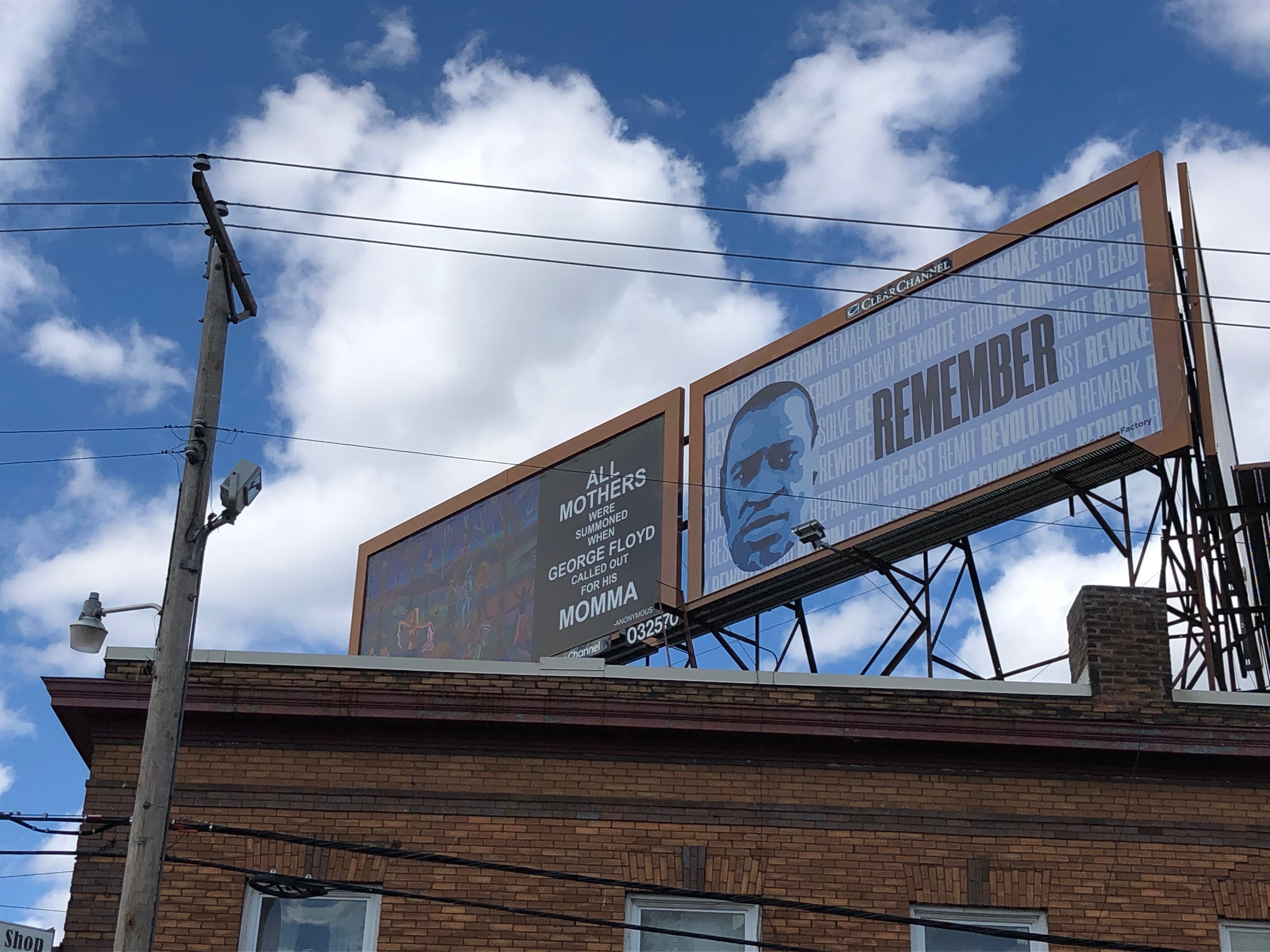
I visited 38th and Chicago this weekend, the corner where George Floyd died under Derek Chauvin’s knee. The street outside Cup Foods has been turned into a living memorial—flowers and notes to Mr. Floyd, the names of other victims of police violence written on the pavement. The area was surprisingly quiet, despite the helicopter circling overhead—police or media, I couldn’t be sure. White and black people walked peacefully through the space, and the mood was one of mourning and determination.

Twelve people will make a decision this week. But change is a social imperative. The next story is up to us.